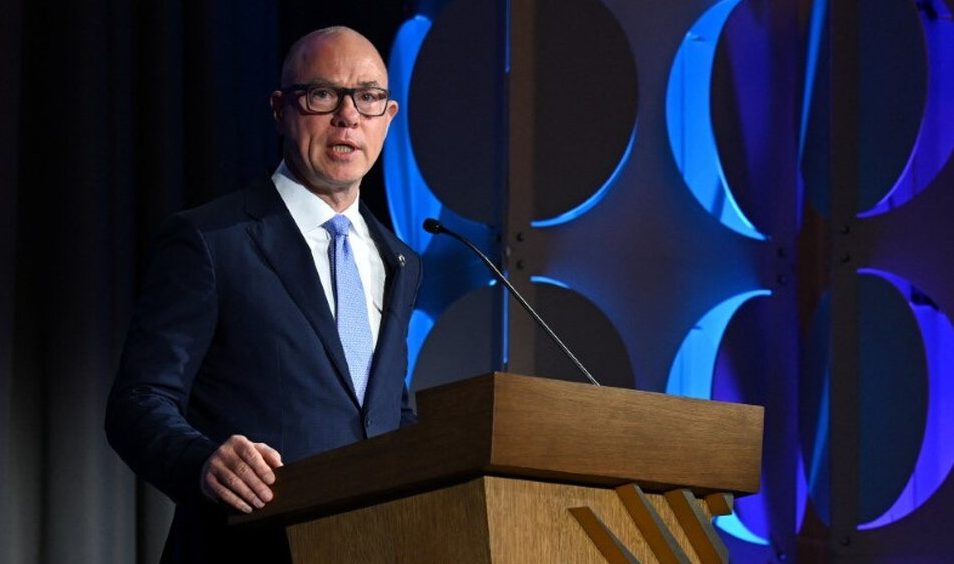
U.S. Federal Aviation Administration (FAA) Administrator Bryan Bedford met with chief executives of major U.S. airlines on Thursday to discuss a new technology-driven strategy aimed at reducing flight delays and cancellations across the country.
The meeting, organized by Airlines for America, brought together leaders from major carriers including American Airlines, United Airlines, Delta Air Lines and Southwest Airlines as the FAA prepares to begin rolling out its new SMART system this month.
New system to improve flight scheduling
The SMART system short for Strategic Management of Airspace, Routes, and Trajectories uses predictive analytics to examine airline schedules, weather conditions, airport capacity, airspace conditions and other operational constraints.
The initial focus will be on helping airlines and the FAA more efficiently reschedule flights cancelled because of severe weather. The system could later be expanded to coordinate flight schedules and aircraft trajectories before planes depart, helping prevent congestion before it develops.
The FAA awarded an $875 million, 12-year contract to Air Space Intelligence in June to develop and operate the system.
Part of a wider air traffic control overhaul
The initiative is part of a broader $12.5 billion modernization of the U.S. air traffic control system. The FAA is seeking an additional $10 billion to fund further improvements.
The agency has faced persistent challenges from rising passenger demand, severe weather, airport construction and shortages of air traffic controllers. These pressures have contributed to congestion at several major airports.
The FAA has already imposed flight reductions at Chicago O’Hare and airports in the New York region to address capacity problems.
Airlines welcome the initiative
Airlines for America has endorsed the SMART program, saying improved coordination and decision-making could have a direct benefit for passengers by reducing delays and cancellations.
United Airlines CEO Scott Kirby said the technology could significantly improve operations during weather disruptions by allowing airspace to be used more intelligently.
The FAA’s latest effort comes as airlines and passengers continue to face disruptions from weather and air traffic control constraints. The agency hopes that combining advanced data analysis with improved coordination will make the U.S. aviation system more reliable and resilient.
________________________________________________________________________________________________________________