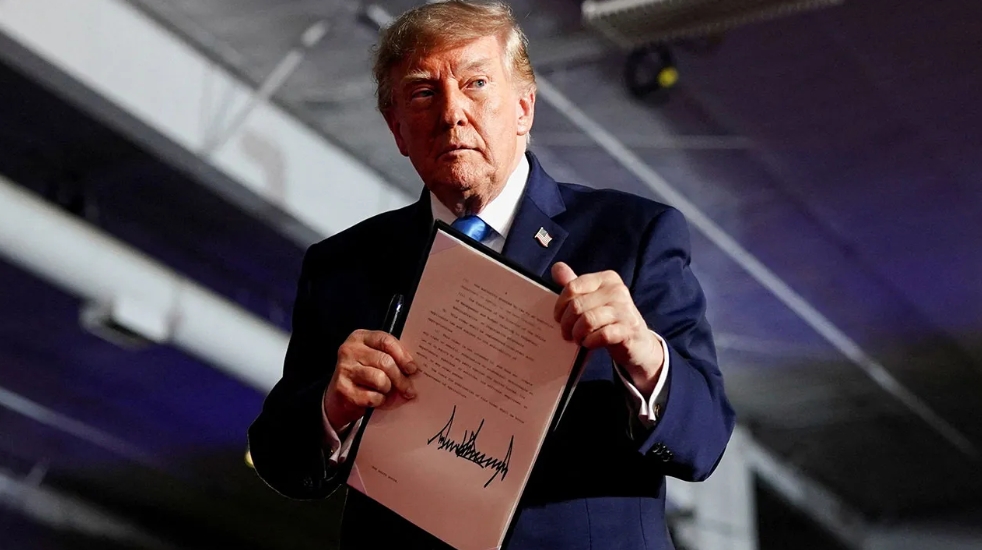
U.S. President Donald Trump has signed an executive order temporarily expanding access to tax-exempt red-dyed diesel, as the administration seeks to ease the impact of sharply higher fuel costs on farmers, truckers and other businesses.
Trump signed the order on October 5 during a rally in Nebraska, directing federal agencies to provide temporary relief on the use of dyed diesel for highway purposes. The move comes as U.S. diesel prices remain elevated and ahead of the November 3 midterm elections, where control of Congress is at stake.
Temporary Tax Relief
Red-dyed diesel is normally intended for off-road uses such as farming, construction and heating and is exempt from federal highway fuel taxes. The fuel is dyed red so authorities can distinguish it from taxable on-road diesel.
Under Trump’s order, the Treasury Department is directed to defer certain federal excise-tax payments on dyed diesel used on highways from October 5 through December 31, 2026, where legally authorized. The administration also ordered relief from penalties and interest during the temporary period.
The federal excise tax on diesel is approximately 24.3 cents per gallon, although state taxes can also apply. The White House says the measure could provide meaningful savings for truckers and other fuel-intensive industries.
Farmers and Truckers Targeted
The Agriculture Department has been instructed to work with agricultural cooperatives, rural fuel distributors and other industry groups to ensure adequate supplies of dyed diesel in areas experiencing high demand.
The Transportation Department will also coordinate with state governments, industry representatives and labour organisations over implementation.
The administration argues that lower diesel costs could reduce expenses across the transportation and agricultural sectors and eventually help moderate the price of goods transported by truck.
Diesel Prices Under Pressure
The move comes after U.S. diesel prices reached roughly $6.50 a gallon last month, according to Reuters, amid disruptions to global fuel supplies linked to geopolitical conflicts and refinery problems.
The United States and other major economies have also been working to increase fuel supplies. G7 countries recently announced plans to release 100 million barrels of diesel, following pressure from Washington to address tight global supplies.
However, analysts have questioned how much the tax measure alone can reduce prices. Some industry experts argue that the fundamental problem is a shortage of diesel supplies rather than taxation, meaning the impact on pump prices could be limited.
Political and Economic Stakes
The announcement comes as high fuel and living costs create a political challenge for the Trump administration ahead of the midterm elections. Republicans currently control both chambers of Congress, and fuel prices have become an increasingly important economic issue for voters.
The administration says the temporary diesel relief is designed to put money back into the hands of farmers, truckers and workers while global energy markets remain under pressure.
The latest action represents one of Trump’s most direct attempts to address soaring diesel costs, although its long-term effect will depend heavily on global fuel supplies, refinery output and whether the temporary tax relief is extended beyond the end of 2026.
________________________________________________________________________________________________________________