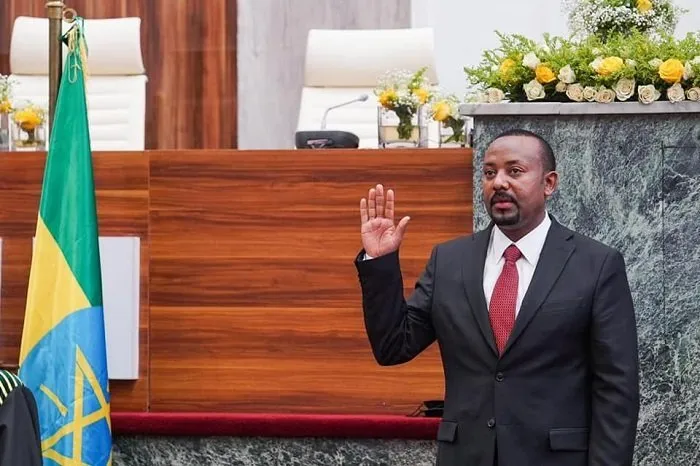
New Five-Year Mandate Begins
Ethiopian Prime Minister Abiy Ahmed has been sworn in for a second five-year term, formally beginning a new phase of his leadership following the country’s latest parliamentary elections.
Abiy took the oath of office on October 5, 2026, during the inaugural session of Ethiopia’s newly elected House of Peoples’ Representatives. Parliament formally appointed him prime minister as part of the formation of the new federal government.
His second term follows the June 2026 parliamentary election, in which Abiy’s ruling Prosperity Party secured 438 of the 547 seats in parliament, according to Africanews.
Security Challenges Dominate New Term
Abiy begins his renewed mandate as Ethiopia faces significant security challenges, particularly in the northern Tigray region, where fighting has recently intensified between federal forces and armed groups.
Recent clashes have included airstrikes and artillery exchanges around Mekelle and other parts of Tigray. Reuters reported that at least 17 people were killed in reported attacks, although the details of the strikes could not be independently verified.
The renewed violence has raised concerns about a return to wider conflict following the devastating 2020–2022 Tigray war.
Red Sea Access a Key Priority
In his address to parliament following his swearing-in, Abiy again highlighted Ethiopia’s need for access to the Red Sea, describing maritime access as important to the country’s economic and strategic interests.
Ethiopia has been landlocked since Eritrea became independent in 1993. Abiy has said his government will seek access to the sea through peaceful negotiations, while Eritrea has expressed concern over Ethiopia’s ambitions.
The issue adds another layer of tension to an already fragile regional security environment involving Ethiopia, Eritrea, Sudan, Egypt and Somalia.
Economic and Political Pressures
Abiy’s new administration will also face pressure to address economic challenges, strengthen political institutions and maintain stability across Ethiopia’s diverse regions.
His government has previously promoted economic reforms and efforts to modernise the country, but the continued security crises and regional tensions remain major obstacles to those ambitions.
Abiy first became prime minister in 2018 and was awarded the 2019 Nobel Peace Prize for his efforts to resolve the long-running conflict with neighbouring Eritrea. His renewed term now begins amid a markedly more challenging regional environment.
A Critical New Chapter for Ethiopia
The swearing-in formally completes the establishment of Ethiopia’s new federal government following the 2026 election and opens another five-year period under Abiy’s leadership.
The government’s ability to contain renewed fighting in the north, manage relations with neighbouring countries, address economic pressures and pursue its development agenda will be closely watched during the new term.
________________________________________________________________________________________________________________