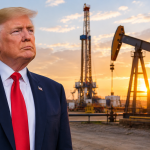
U.S. President Donald Trump has invoked the Cold War-era Defense Production Act to strengthen domestic oil production, expand refining capacity and increase fuel supplies as rising energy prices place growing pressure on American consumers and businesses.
In a presidential memorandum issued on October 22, Trump designated domestic petroleum production, refining and related infrastructure as essential to national defence, opening the door for federal financial support to accelerate energy projects across the United States.
The administration plans to provide up to $150 million in funding to expand petroleum production, storage and logistics at refineries. The U.S. Department of Energy said the initiative is intended to increase supplies of gasoline, diesel, jet fuel and other petroleum products, with the potential to raise refining output by millions of gallons per day. The funding will come from an existing $1 billion allocation for energy projects considered critical to national security.
Energy Security Amid Global Supply Disruptions
Trump’s decision comes as crude oil and diesel prices have surged following disruptions to global energy shipments linked to the conflict involving the United States, Israel and Iran. Ukrainian attacks on Russian oil refineries have added further pressure to international fuel supplies.
Under Section 303 of the Defense Production Act of 1950, the federal government can support critical industrial capacity through financial assistance, purchase commitments and other measures. The presidential memorandum cites financing constraints, lengthy development timelines, permitting delays, infrastructure bottlenecks and supply-chain limitations as obstacles to expanding domestic petroleum capacity.
The administration has argued that a reliable supply of petroleum products is vital to military readiness, industrial operations and essential infrastructure.
Impact on Consumers and the Energy Market
The initiative is intended to strengthen domestic fuel availability and help ease prices for American households and businesses. However, the immediate impact on pump prices remains uncertain, as expanding refinery capacity and bringing additional fuel supplies to market can take time.
The administration has not yet announced the complete list of projects that will receive funding. Vice President JD Vance previously indicated that the government would use the legislation to support an expansion of a refinery operated by Delek US Holdings in Tyler, Texas.
The move also comes ahead of the November 3 congressional midterm elections, with high fuel costs and affordability concerns presenting economic and political challenges for the Trump administration.
While the measure signals a renewed federal push to strengthen America’s fossil-fuel infrastructure, its longer-term success will depend on how quickly supported projects increase production and whether additional supplies can ease pressure on fuel prices.
________________________________________________________________________________________________________________