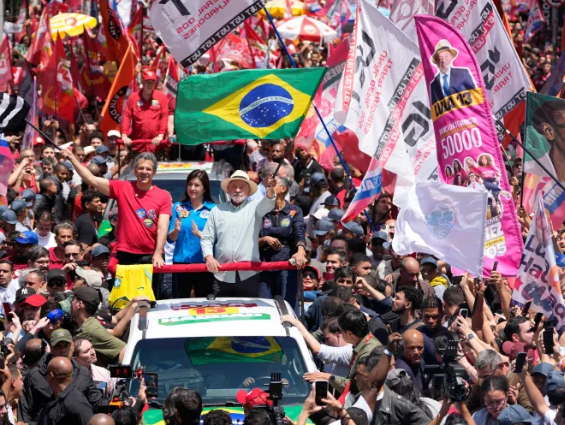
Millions of Brazilians are voting in a closely contested presidential runoff between incumbent Luiz Inácio Lula da Silva and Senator Flávio Bolsonaro. The election could reshape the political direction of Latin America’s largest country and influence its relationships with the United States and other global powers.
Brazilians headed to the polls on Sunday, October 25, to choose their next president in a closely watched runoff election between left-wing incumbent Luiz Inácio Lula da Silva and right-wing Senator Flávio Bolsonaro.
The contest follows the first round of voting earlier this month, in which Bolsonaro finished ahead of Lula, setting the stage for a decisive second round. Neither candidate secured the majority required to win the presidency outright, making Sunday’s vote crucial to determining the country’s political future.
The election has drawn international attention because of its potential implications for Brazil’s economic policy, domestic security and foreign relations. Brazil is Latin America’s largest economy and plays a significant role in international trade, environmental negotiations and regional diplomacy.
Lula, who is seeking another presidential term, has campaigned on his administration’s social programmes and efforts to address economic inequality. His campaign has also emphasised Brazil’s independence in international affairs amid tensions with the administration of US President Donald Trump.
Bolsonaro, the son of former Brazilian president Jair Bolsonaro, has campaigned on a conservative platform, emphasising public security and a different direction for the country’s leadership. He has also pledged to pursue a pardon for his father, who was convicted in 2025 for plotting a coup following his 2022 election defeat.
The campaign has been shaped by concerns over the cost of living, corruption allegations, crime and the country’s political divisions. Relations with Washington have also featured prominently, following trade tensions between the United States and Brazil and allegations of US efforts to influence the political contest, which Washington has denied.
Approximately 158.7 million Brazilians are eligible to vote in the election, according to Brazil’s electoral authorities. Polling stations opened at 8 a.m. local time and were scheduled to close at 5 p.m. Brasília time.
With the two candidates entering the runoff after a closely fought first round, the outcome is expected to have significant consequences for Brazil’s domestic priorities and its role on the international stage.
SEO Tags: Brazil presidential election 2026, Brazilians vote, Luiz Inácio Lula da Silva, Flávio Bolsonaro, Brazil runoff election, Brazilian politics, Jair Bolsonaro, Brazil economy, US-Brazil relations, Latin America, global politics, world news