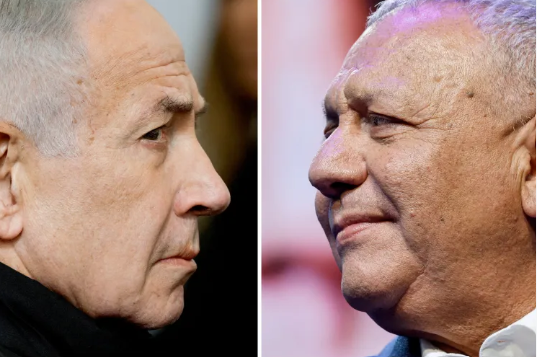
Israel’s parliamentary election has ended without a clear path to a governing majority, leaving Prime Minister Benjamin Netanyahu and opposition leader Gadi Eisenkot facing complex coalition negotiations. The political uncertainty has been compounded by allegations of voter fraud and foreign interference, claims that election officials say have not been substantiated.
The final vote count gives Netanyahu’s bloc 53 seats in the 120-member Knesset, while the opposition bloc led by Eisenkot has secured 48 seats. Arab-led parties have won a combined 19 seats, marking a historic result and potentially giving them a decisive role in determining the next government. A parliamentary majority requires at least 61 seats.
The results represent a setback for Netanyahu’s governing coalition, which held 68 seats in the outgoing parliament. Although his Likud party remains the largest individual party, the broader right-wing bloc has fallen short of the numbers required to govern independently.
Eisenkot and other opposition leaders are now exploring possible coalition arrangements. However, forming a government could prove challenging because several opposition parties have ruled out working with Arab-led parties, despite their combined parliamentary strength. Other possible arrangements could involve cooperation between political groups with differing ideological positions.
Voter Fraud Allegations Draw Scrutiny
The election aftermath has also been marked by allegations from Netanyahu’s Likud party that irregularities and possible foreign interference affected the vote, particularly in Arab communities.
However, Israeli police have reported no investigative or intelligence-based evidence supporting claims that the election was stolen. The director of the Central Elections Committee has also pushed back against allegations of widespread fraud, while a limited investigation into suspected foreign interference continues.
Officials have indicated that any substantiated individual violations would need to be assessed on their evidence and are not expected to change the overall election outcome. Opposition leaders have warned against using unverified allegations to undermine the results or delay the formation of the new parliament.
The allegations have intensified political tensions, particularly over the role of Arab citizens and their elected representatives in Israel’s political system. The record number of seats won by Arab-led parties has placed their potential participation in coalition negotiations at the centre of the debate over who will govern the country.
Official Certification and New Knesset
The Central Elections Committee has published the final seat allocation, with the results scheduled to be submitted to President Isaac Herzog on November 4 following the examination of any remaining inquiries. The new Knesset is expected to be sworn in on November 10.
Following certification, the president will consult political representatives and assign a candidate to attempt to form a government. The process will require negotiations among parties seeking to assemble a coalition with sufficient parliamentary support.
Netanyahu remains prime minister while the process unfolds, but the election has left his political future uncertain. For Eisenkot and the opposition, the challenge is to turn their combined parliamentary strength into a viable governing arrangement.
With neither major bloc holding a majority, the coming negotiations will be critical to Israel’s political direction. Whether the parties can reach an agreement or whether the country could eventually face another election will depend on the alliances they are willing to form.