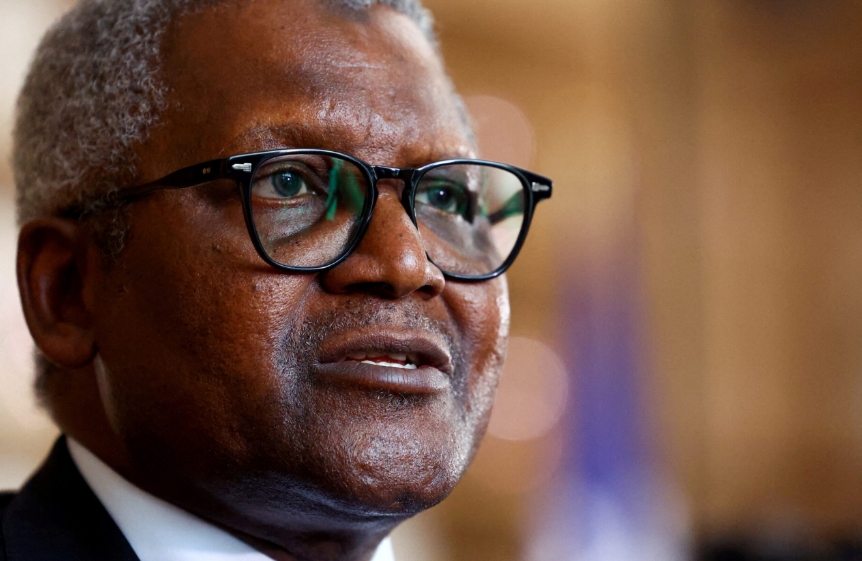
Nigerian billionaire industrialist Aliko Dangote has launched a major $2.5 billion fuel storage and regional pipeline project in Namibia, marking a significant expansion of his energy investments in Southern Africa.
The project, officially unveiled in Walvis Bay on Wednesday, November 4, aims to strengthen fuel security, reduce transportation costs and improve access to petroleum products across Namibia and neighbouring landlocked countries. The launch was attended by Namibian President Netumbo Nandi-Ndaitwah, who described the development as a strategic national project placed under the Office of the President to facilitate its implementation.
The proposed facility, located at Farm 58 near Walvis Bay, will have a storage capacity of approximately 600 million litres, equivalent to four million barrels. This will include 360 million litres of diesel and 240 million litres of petrol, making it approximately eight times larger than Namibia’s existing 75-million-litre National Oil Storage Facility.
Dangote said the project is expected to be completed within 18 to 20 months and will include supporting infrastructure for fuel storage, dispensing and distribution.
A major component of the investment is a proposed 1,700-kilometre regional pipeline designed to connect Walvis Bay with inland markets, including Botswana, Zimbabwe, Zambia and potentially Malawi and the Democratic Republic of Congo. The final route will depend on engineering studies, route surveys and regulatory approvals.
The infrastructure is expected to position Namibia as a strategic fuel distribution and logistics hub, offering landlocked countries an alternative route for accessing refined petroleum products.
Dangote said the investment would help reduce logistical vulnerabilities, high shipping costs and energy insecurity while strengthening economic cooperation across the region.
The development also forms part of Dangote’s wider ambition to expand his business empire across Africa. He already operates the continent’s largest refinery in Nigeria, with a capacity of approximately 700,000 barrels per day, and is pursuing additional refinery and energy infrastructure investments in other African markets.
Beyond improving fuel distribution, the Namibian project is expected to create opportunities in construction, logistics, warehousing and related industries. However, the anticipated benefits will depend on the project’s implementation, financing arrangements and the completion of the necessary regulatory processes.
The $2.5 billion investment represents a major step towards developing interconnected African energy infrastructure, with the potential to reduce dependence on distant fuel supply routes and strengthen regional energy security.
________________________________________________________________________________________________________________