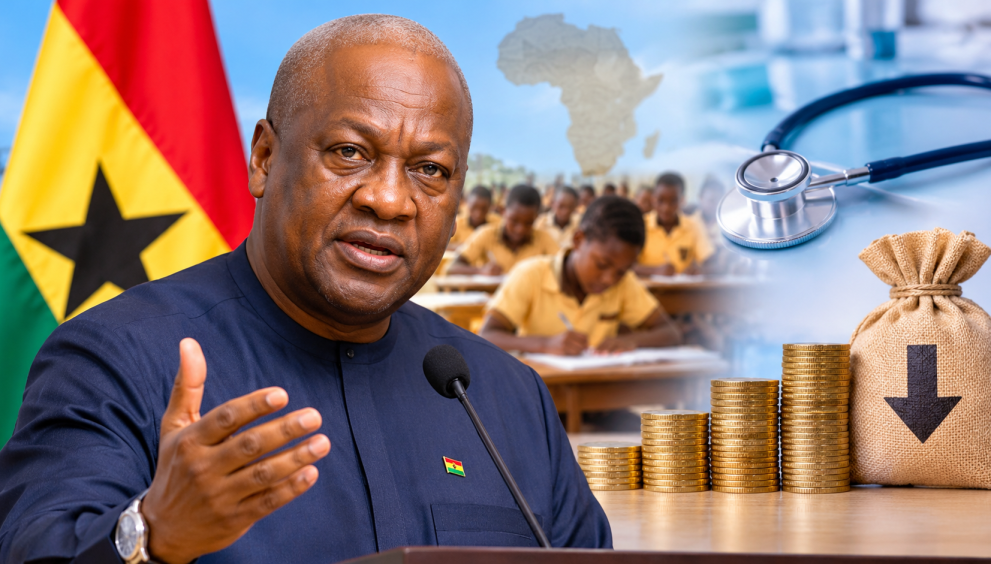
Ghanaian President John Dramani Mahama is calling for reparations for the transatlantic slave trade to go beyond direct financial compensation, urging countries involved in the trade to support education, healthcare, economic development and debt relief across affected nations.
Mahama says meaningful reparatory justice must address the lasting economic and social consequences of slavery and colonialism, rather than focus solely on cash payments. His proposals include targeted investments in schools, healthcare systems, science, youth empowerment and climate resilience, alongside reforms to international financial and debt arrangements that continue to place pressure on developing economies.
The Ghanaian leader’s position comes amid renewed international discussions on historical justice, following a Ghana-led United Nations resolution adopted in March 2026 that described the transatlantic slave trade and the enslavement of Africans as the gravest crime against humanity.
Mahama has also welcomed Britain’s recent openness to a formal apology for its role in the slave trade, while stressing that an apology alone cannot repair the damage caused. He wants structured discussions involving the African Union (AU), the Caribbean Community (CARICOM), the African diaspora and countries historically involved in the trade.
Ghana and the United Kingdom have recently made progress towards establishing a structured dialogue on reparatory justice. At a bilateral meeting on November 2, 2026, the two countries discussed a proposed 12-month process covering historical justice, education, the return of cultural artefacts, climate justice, debt sustainability and reform of the international financial system.
The discussions also include the future of Asante cultural artefacts held by the British Museum.
Mahama, who serves as the African Union’s Champion on Reparations, is pushing for practical measures that recognise historical injustices while creating opportunities for long-term development and greater economic equality.
The renewed campaign places reparations firmly on the international agenda, raising questions about how former colonial powers can address the enduring consequences of slavery and contribute to meaningful reconciliation.
________________________________________________________________________________________________________________