Car horns are banned, delivery drones grounded and residents urged to limit travel as the Chinese technology hub prepares to welcome world leaders, including US President Donald Trump and Russian President Vladimir Putin.
China’s technology hub of Shenzhen is adopting an unusual atmosphere of quiet as it prepares to host world leaders for the 2026 Asia-Pacific Economic Cooperation (APEC) summit.
In an extensive effort to manage traffic, security and public activity ahead of the high profile gathering, authorities have introduced a series of restrictions, including a ban on car horns, the suspension of delivery drone services and measures encouraging residents to leave their vehicles at home.
The summit is expected to bring around 20 world leaders and their delegations to the city, including US President Donald Trump and Russian President Vladimir Putin.
More than 1.5 million local car owners have pledged to keep their vehicles off the roads in exchange for APEC identification stickers and public transport incentives worth up to 100 yuan.
From Tuesday, November 17, vehicles with registration plates from outside Shenzhen are also barred from entering much of the city during daytime hours.
The restrictions extend to the city’s popular electric bicycles. Riders have been encouraged to dismount in exchange for insurance discounts, while parked bicycles are being cleared from major streets.
One of the most unusual measures is the citywide enforcement of restrictions on unnecessary horn use. Acoustic cameras are being used to detect violations, with fines starting at 300 yuan.
Delivery drones, a prominent feature of Shenzhen’s technology and logistics industry, have also been grounded. Food delivery company Meituan has suspended its drone delivery services for 10 days during the summit preparations.
The city has also introduced changes to daily routines. Primary and middle schools are observing a four-day autumn break, while employers have been encouraged to offer remote working arrangements, flexible schedules or paid leave to help reduce movement across the city.
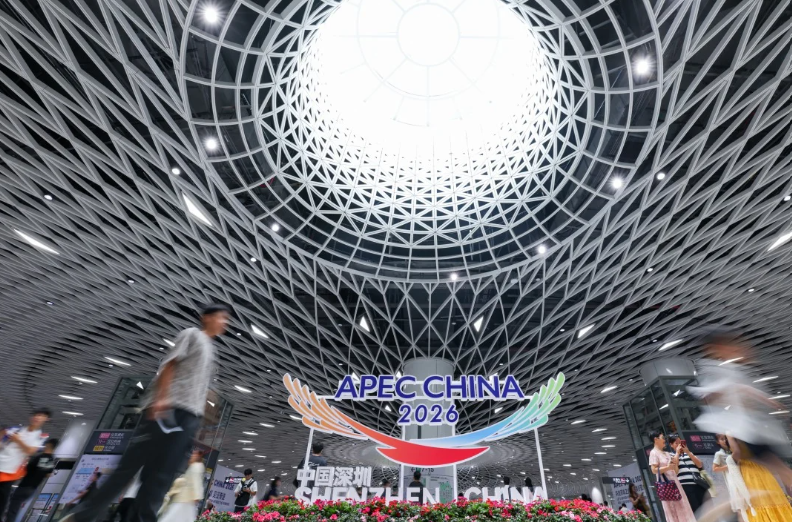
Authorities have undertaken extensive beautification around the summit venue, with roads resurfaced, flower displays installed and public spaces prepared for visiting delegations. Thousands of volunteers wearing red jackets have also been deployed across different neighbourhoods.
However, the preparations have not been welcomed by everyone. Some residents have raised concerns about road closures, disrupted work schedules, childcare arrangements and the public cost of hosting the international event.
Shenzhen’s preparations reflect the scale of the diplomatic gathering and China’s efforts to present the city as an orderly, modern centre of technology, innovation and international business.
The summit comes at a significant moment in global affairs, with discussions involving trade, economic cooperation and international security expected to feature prominently. The planned meeting between Trump, Putin and Chinese President Xi Jinping is also drawing international attention.
For Shenzhen, the event is an opportunity to showcase its transformation into one of China’s leading technology and economic centres. For residents, however, the arrival of world leaders means adjusting to an unusually quiet and tightly regulated city.