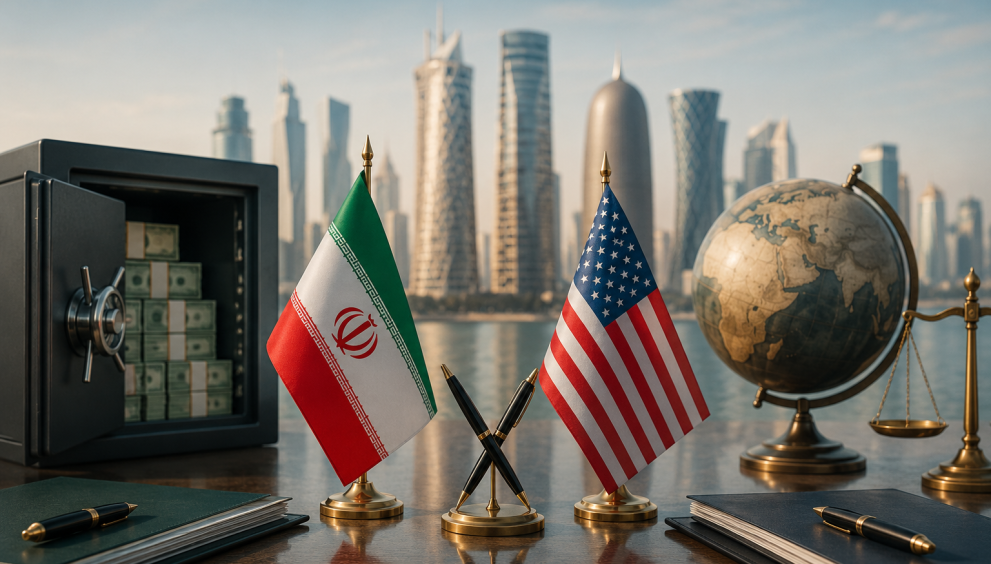
Negotiations between Iran and the United States have entered a new and potentially decisive phase, with discussions in Doha now focusing on the fate of billions of dollars in Iranian assets frozen in Qatar, a move that could pave the way for a broader diplomatic breakthrough between the longtime adversaries.
The talks, mediated by Qatari officials and supported by regional partners, come amid renewed optimism that Washington and Tehran may be able to de-escalate tensions and establish a framework for lasting peace after months of military confrontations and diplomatic uncertainty.
Frozen Assets Become Central to Negotiations
According to officials familiar with the discussions, one of the key issues under negotiation is access to approximately $6 billion in Iranian oil revenues currently held in Qatari banks. The funds were originally transferred from South Korea to Qatar under a previous prisoner exchange agreement but have remained inaccessible to Tehran due to sanctions restrictions and heightened tensions between the two countries.
Iran has long argued that the money belongs to the Iranian people and should be released without conditions. The United States, however, has insisted that any transfer or use of the funds must be subject to strict monitoring and assurances that the money will be used exclusively for humanitarian purposes, including food, medicine, and other civilian needs.
Diplomatic sources say negotiators are now exploring several mechanisms that could permit limited access to the funds while maintaining oversight to address Washington’s concerns.
Technical Discussions Expand Beyond Nuclear Issues
The Doha talks have evolved beyond their initial focus on regional security and de-escalation. Officials say negotiators are now discussing a broader package that could include:
- Access to frozen Iranian assets;
- Measures to prevent further military escalation;
- Security arrangements for shipping through the Strait of Hormuz;
- Potential sanctions relief mechanisms;
- Future discussions on Iran’s nuclear activities and regional influence.
The negotiations are part of a wider effort to rebuild trust between the two countries after years of hostility and repeated diplomatic breakdowns.
Trump Signals Optimism
U.S. President Donald Trump on Wednesday struck an optimistic tone regarding the negotiations, saying that relations with Iran were improving and that the denuclearization process was “moving along well.”
Trump’s comments suggest that the White House sees the ongoing negotiations as an opportunity to secure a broader agreement that could limit Iran’s nuclear capabilities while reducing the risk of another military confrontation in the Middle East.
Administration officials have repeatedly emphasized that preventing Iran from acquiring nuclear weapons remains a central objective of U.S. policy.
Iran Seeks Economic Relief
For Tehran, access to frozen funds is seen as a critical step toward easing economic pressure caused by years of international sanctions.
Iran’s economy has faced persistent challenges, including inflation, currency depreciation, and reduced oil revenues. Iranian officials argue that releasing the frozen assets could provide much-needed humanitarian and economic relief without violating international obligations.
Analysts say progress on the frozen assets issue could also serve as a confidence-building measure, helping both sides move toward broader agreements on sanctions and security matters.
Qatar’s Growing Diplomatic Role
Qatar has emerged as a key mediator in regional diplomacy, maintaining relations with both Washington and Tehran and positioning itself as a trusted intermediary during periods of heightened tension.
The Gulf state has previously played an important role in facilitating prisoner exchanges, ceasefire discussions, and indirect negotiations between the United States and Iran.
Diplomatic observers say Doha’s involvement could prove crucial in bridging differences that have repeatedly derailed previous rounds of talks.
A Delicate Path Forward
Despite the optimistic rhetoric surrounding the negotiations, significant obstacles remain. Deep mistrust continues to define U.S.-Iran relations, and major disagreements persist over sanctions, nuclear restrictions, and regional security issues.
Any agreement involving the release of frozen assets is likely to face intense political scrutiny in both Washington and Tehran, where hardliners remain skeptical of compromise.
Nevertheless, the fact that both sides have continued negotiations and expanded discussions to include economic issues is being viewed as a sign that diplomacy still has a chance to succeed.
As talks continue in Doha, the world will be watching closely to see whether progress on frozen Iranian assets can become the foundation for a broader diplomatic agreement capable of reshaping relations between Iran and the United States and bringing greater stability to the Middle East.
________________________________________________________________________________________________________________