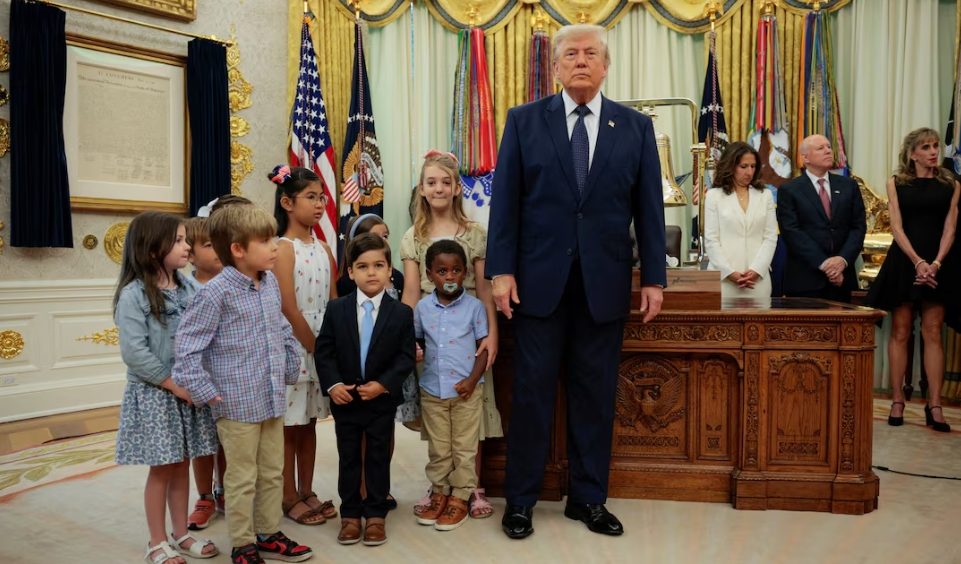
U.S. President Donald Trump announced that more than 500,000 American children have received the first $1,000 federal deposits into newly created Trump Accounts, marking the official launch of a signature savings initiative designed to encourage long-term investing and wealth creation for future generations.
The announcement was made during a White House event celebrating the rollout of the program, with Trump remotely ringing the opening bell for both the New York Stock Exchange (NYSE) and Nasdaq from the Oval Office a symbolic gesture highlighting the administration’s focus on investment and financial markets.
What Are Trump Accounts?
Trump Accounts are tax-advantaged investment accounts established under legislation signed into law as part of the administration’s broader tax and economic package.
The program automatically provides an initial $1,000 contribution from the U.S. Treasury for eligible American children born between January 1, 2025, and December 31, 2028, provided they are U.S. citizens with valid Social Security numbers. The funds are invested in low-cost index funds intended to grow over time through long-term market returns.
Parents or legal guardians serve as custodians of the accounts until the child reaches adulthood.
Half a Million Accounts Already Funded
According to President Trump, the Treasury has already deposited seed money into more than 500,000 accounts, representing one of the largest initial government-backed investment programs for children in U.S. history.
“The American Dream starts now,” Trump said during the launch event, arguing that every eligible child should have the opportunity to begin building wealth from birth.
Administration officials said the rapid enrollment demonstrates strong public interest in the initiative during its first days of operation.
How the Accounts Work
The accounts are designed as long-term investment vehicles rather than traditional savings accounts.
Key features include:
- A one-time $1,000 federal seed deposit for eligible newborns.
- Investments placed in diversified, low-cost U.S. stock index funds.
- Families may contribute up to $5,000 annually.
- Employers may contribute up to $2,500 under certain tax rules.
- Funds remain invested until the child reaches adulthood, when withdrawals become subject to applicable tax rules.
The administration says early investment gives children more time to benefit from compound growth over many years.
Corporate Support Boosts the Program
Several major American corporations have pledged additional financial support to expand the initiative.
Companies including Visa, Dell Technologies, Comcast, and Micron Technology have announced matching contributions or philanthropic commitments aimed at increasing participation among eligible families.
One of the largest commitments has come from the Michael & Susan Dell Foundation, which pledged billions of dollars to help fund additional deposits for millions of children living in qualifying lower-income communities.
Administration officials say partnerships with private businesses will help broaden access to long-term investment opportunities.
Supporters Say It Encourages Wealth Building
Republican lawmakers and business leaders have praised the initiative as a way to promote financial literacy and encourage families to participate in the stock market.
Supporters argue that beginning investments at birth could significantly increase lifetime wealth through compound returns.
Senator Ted Cruz, who has long advocated for children’s investment accounts, said the program gives young Americans “a stake in the nation’s economic success” while encouraging a culture of saving and investing.
The White House has described the initiative as part of a broader effort to expand ownership and investment opportunities for American families.
Critics Question Long-Term Impact
Despite bipartisan interest in encouraging financial literacy, the program has also drawn criticism.
Some economists argue that while the $1,000 government contribution provides a valuable starting point, many lower-income families may struggle to make additional annual contributions needed to maximize long-term growth.
Others note that families already have access to existing tax-advantaged savings vehicles, including 529 education savings plans and retirement accounts, and question whether Trump Accounts provide sufficient advantages over those options.
Financial advisers have also pointed out that account holders should carefully compare Trump Accounts with other savings and investment products before making additional contributions.
Part of a Broader Economic Agenda
The launch of Trump Accounts forms part of the administration’s wider economic strategy aimed at encouraging investment, expanding household wealth, and increasing participation in U.S. financial markets.
Officials say the accounts complement other tax reforms and family-focused policies included in the administration’s economic legislation.
The White House hopes the initiative will create a generation of young Americans with an early financial stake in the nation’s economy while reinforcing long-term saving habits.
Looking Ahead
With more than half a million accounts already funded, federal officials expect enrollment to continue growing as additional eligible children are registered.
The Treasury Department is working with participating financial institutions to process new accounts and ensure families can access online tools to monitor investments and make additional contributions.
As the program expands, policymakers, economists, and financial experts will be closely watching whether the initiative succeeds in improving long-term wealth accumulation and financial literacy among future generations of Americans.
________________________________________________________________________________________________________________