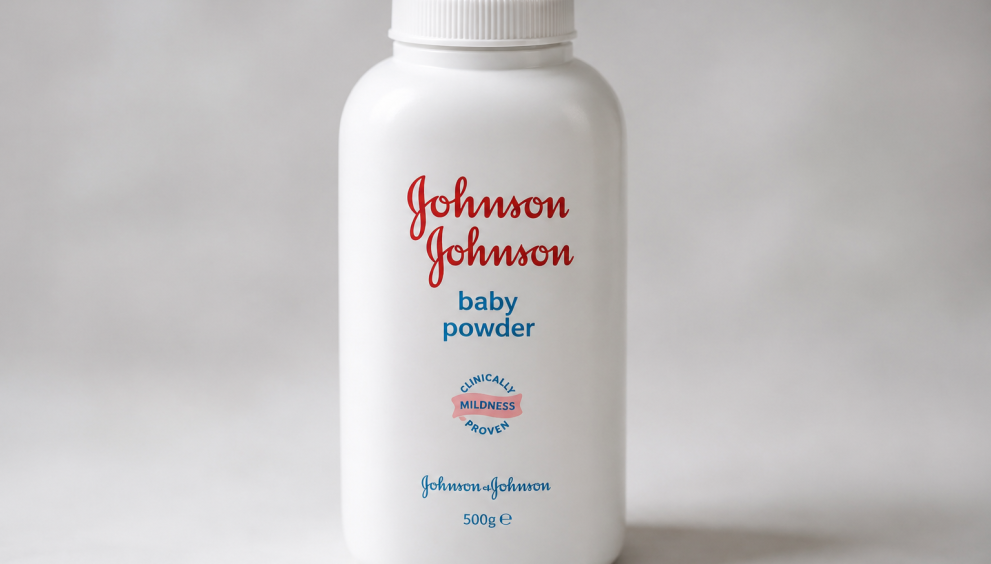
Johnson & Johnson has agreed to pay $5.5 billion to settle tens of thousands of lawsuits alleging that its talc-based products caused ovarian cancer and other serious illnesses, marking one of the largest product-liability settlements in U.S. corporate history and potentially bringing an end to nearly a decade of litigation that has shadowed the healthcare giant.
The settlement was announced after lengthy negotiations involving plaintiffs’ lawyers representing women who claimed they developed ovarian cancer after years of using Johnson’s Baby Powder and other talc products. If approved by the courts, the agreement would resolve the overwhelming majority of current claims and establish a compensation fund for eligible claimants.
Long-running litigation
J&J has faced more than 60,000 lawsuits over allegations that its talc products were contaminated with asbestos and contributed to ovarian cancer and mesothelioma. The company has consistently denied that its talc products were unsafe or contained asbestos, maintaining that decades of scientific testing support their safety.
Despite those denials, J&J has spent years attempting to contain the legal fallout. The company previously pursued a controversial bankruptcy strategy involving a subsidiary known as LTL Management, seeking to channel the talc liabilities into bankruptcy court. U.S. courts repeatedly rejected those efforts, increasing pressure on the company to negotiate a broader settlement.
What the settlement includes
According to people familiar with the agreement, the $5.5 billion would be paid over several years and would cover current and future ovarian cancer claims tied to talc products sold in the United States. The settlement does not constitute an admission of wrongdoing by Johnson & Johnson.
Plaintiffs’ attorneys described the deal as a significant step toward compensating thousands of women and families who have waited years for their cases to be resolved. Many individual lawsuits had been scheduled for trial across multiple states, creating substantial financial and reputational risks for the company.
Company response
In a statement, Johnson & Johnson said the agreement is intended to provide finality and allow the company to focus on its core pharmaceutical and medical-technology businesses. The company reiterated that it continues to believe the claims lack scientific merit but concluded that a comprehensive settlement is in the best interests of patients, employees, shareholders, and other stakeholders.
J&J stopped selling talc-based Johnson’s Baby Powder in the United States and Canada in 2020 and later discontinued the product globally, replacing it with a cornstarch-based formulation. The company said the decision was driven by declining demand and litigation-related misinformation rather than safety concerns.
Legal and financial significance
Legal analysts say the proposed settlement could become a landmark resolution in mass-tort litigation, comparable to major settlements involving tobacco, opioids, and other consumer-health products. However, the agreement still requires court approval, and some claimants who oppose the deal could attempt to challenge its terms.
Investors have closely watched the talc litigation because of the uncertainty surrounding J&J’s potential exposure. The company has already spent billions of dollars defending and resolving talc-related claims, and analysts believe a global settlement could remove a significant legal overhang that has weighed on the company for years.
Next steps
The settlement will now be presented to the relevant court overseeing the talc claims. Judges will review whether the agreement is fair to current and future claimants, and affected plaintiffs will be asked to vote on whether to accept the proposed resolution.
If approved, the agreement could bring substantial closure to one of the largest and most closely watched consumer-product liability battles in the world, though some litigation involving mesothelioma and other asbestos-related claims may continue separately.
The announcement is expected to have significant implications not only for Johnson & Johnson but also for how large corporations manage mass-tort liabilities and negotiate nationwide settlements involving consumer health products.
________________________________________________________________________________________________________________