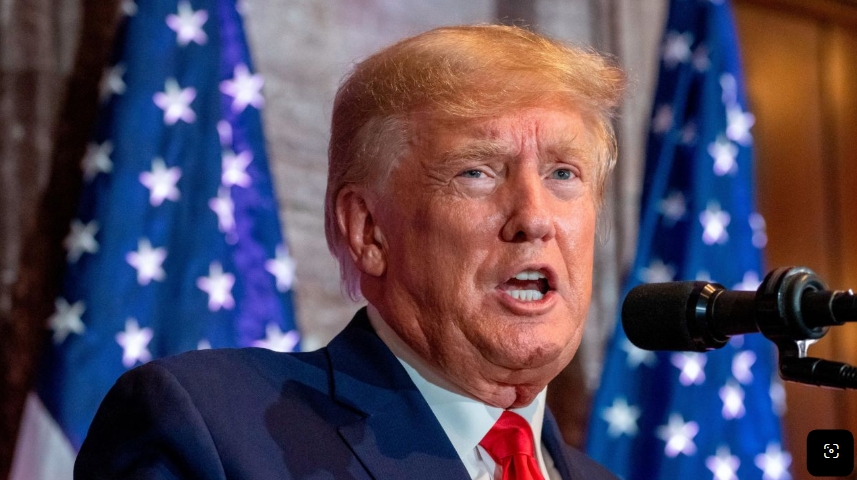
U.S. President Donald Trump is reportedly seeking a renewed meeting with North Korean leader Kim Jong Un later this year, reviving high-level diplomacy on the Korean Peninsula amid rising regional tensions. However, Pyongyang has responded cautiously, saying that any summit would require significant changes in U.S. policy rather than goodwill between the two leaders alone.
According to diplomatic sources and recent reports, Trump is considering a meeting with Kim during his planned Asia visit, with the APEC 2026 summit in Shenzhen, China, in November emerging as a potential venue. No formal agreement has been announced.
North Korea has signalled that it is not rushing back to negotiations. While acknowledging that personal relations between Trump and Kim remain intact, Pyongyang insists that future talks must address what it calls “fundamental security concerns,” including the U.S. demand for complete denuclearization.
The United States continues to maintain that North Korea must eventually dismantle its nuclear weapons programme, a position that remains a major obstacle to restarting formal negotiations.
Tensions on the Korean Peninsula have also been heightened by recent military developments. The U.S. and South Korea recently reduced the scale of their annual joint military exercises, shortening them from 11 days to five in an effort to ease tensions and encourage diplomacy. However, North Korea condemned the drills and responded with a series of short-range ballistic missile launches, underscoring its continued military posture.
Analysts say the situation reflects a familiar diplomatic deadlock: Washington seeks nuclear disarmament, while Pyongyang is increasingly pushing for recognition as a nuclear-armed state and long-term security guarantees.
Trump previously held three historic summits with Kim Jong Un between 2018 and 2019, including meetings in Singapore, Hanoi, and the Korean Demilitarized Zone. While those talks marked a breakthrough in U.S.–North Korea relations, they ultimately failed to produce a lasting agreement on denuclearization.
South Korea has welcomed the possibility of renewed dialogue, urging that Seoul remain closely involved in any future negotiations. Officials in Seoul have also floated the idea of broader multilateral talks involving the U.S., North Korea, South Korea, and China to reduce long-term tensions on the peninsula.
Despite renewed diplomatic signals, experts warn that significant gaps remain between Washington and Pyongyang. North Korea’s continued missile testing, ongoing sanctions pressure, and unresolved security demands suggest that any Trump–Kim meeting would face steep challenges in producing concrete results.
For now, both sides appear open to dialogue but divided on nearly every major condition needed to make it successful.