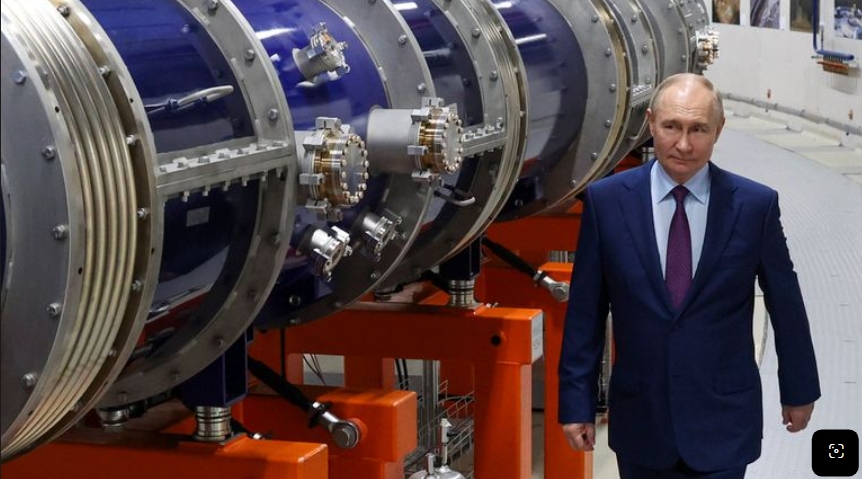
Russian President Vladimir Putin has announced plans for a major expansion of the country’s nuclear power sector, with Moscow targeting the construction and commissioning of approximately 30 gigawatts (GW) of new nuclear generation capacity, including small nuclear power plants.
Putin made the announcement during a meeting on the development of Russia’s nuclear industry, saying the expansion would not simply replace ageing reactors but would significantly increase the country’s overall nuclear generating capacity.
New Nuclear Plants Planned Across Russia
The expansion is expected to extend beyond Russia’s traditional nuclear power regions. Putin said new nuclear power units would increasingly be deployed across the Urals, Siberia and the Russian Far East, areas where Moscow expects electricity demand to grow.
The government sees nuclear energy as an important source of reliable electricity for industrial development, transport, data centres and emerging technologies. The planned expansion also includes smaller and potentially floating nuclear power facilities designed to provide electricity in remote or isolated regions.
Rosatom Already Building 18 Power Units
Russia’s state nuclear corporation, Rosatom, is already implementing projects for 18 nuclear power units at nine locations, according to Rosatom chief Alexey Likhachev.
The projects include conventional large-scale reactors as well as small and floating nuclear power plants. Russia’s longer-term energy strategy has previously identified plans for 38 new nuclear power units with a combined capacity of about 29.3 GW, with the government targeting nuclear power for around 25% of national electricity generation by 2045.
The latest announcement therefore represents an acceleration of a broader strategy to increase nuclear generation while replacing older facilities approaching the end of their operating lives.
Nuclear Energy and Russia’s Future Electricity Demand
Putin has increasingly linked nuclear energy to Russia’s technological and industrial ambitions. Rising electricity requirements from data centres, artificial intelligence, electric transport and automated manufacturing are creating additional demand for dependable power.
Nuclear plants can provide continuous electricity without the direct carbon emissions associated with fossil-fuel generation, making them particularly attractive for energy-intensive industries that require stable supplies around the clock.
Russia already relies heavily on nuclear power. According to the World Nuclear Association, nuclear generation accounted for roughly 19% of Russia’s electricity production in 2023, with the country continuing to develop advanced reactor technologies and fast-neutron systems.
Small Modular Reactors Become Increasingly Important
An important component of Moscow’s strategy is the development of smaller nuclear facilities.
Small modular reactors, or SMRs, can potentially be deployed in locations where constructing a large conventional nuclear power station would be difficult or economically impractical. Russia has already developed floating nuclear technology and is pursuing additional small-reactor projects.
The technology is also becoming an important element of Russia’s international nuclear diplomacy. Moscow is working with countries including Myanmar on a proposed 110-megawatt small modular reactor project, demonstrating Rosatom’s ambitions to expand its nuclear technology exports.
Russia Seeks to Maintain Nuclear Technology Leadership
The expansion is also intended to strengthen Russia’s position as a major global nuclear technology supplier.
Rosatom has extensive international operations and is involved in nuclear projects in several countries. Russia has promoted its reactor technology, nuclear fuel services and broader nuclear infrastructure as part of its international economic and diplomatic strategy.
Putin has previously emphasized Russia’s ability to provide expertise across the nuclear fuel cycle, while Moscow continues to pursue overseas reactor construction despite Western sanctions and geopolitical tensions.
Economic and Strategic Implications
The planned expansion could provide Russia with a significant increase in domestic electricity generation over the coming decades. It could also support industrial development in regions where energy infrastructure needs to expand.
However, such a large nuclear construction programme will require substantial investment, skilled personnel, long construction timelines and strict attention to nuclear safety and waste management.
The geopolitical environment also presents challenges. Russia’s nuclear industry has faced increasing scrutiny and sanctions from Western governments because of the country’s broader confrontation with Europe and the United States.
Despite those pressures, Moscow continues to treat nuclear energy as a strategic industry capable of supporting both domestic development and Russia’s international influence.
A Long-Term Nuclear Push
Putin’s latest announcement confirms that nuclear power will remain central to Russia’s long-term energy strategy.
With plans involving conventional reactors, advanced technologies, small modular reactors and floating nuclear facilities, Moscow is seeking not only to replace ageing generating units but to substantially expand nuclear power’s role in the Russian economy.
If the projects are completed as planned, Russia could significantly increase its nuclear generating capacity over the next two decades, providing additional electricity for industrial growth while strengthening the country’s position in the global nuclear energy market.
________________________________________________________________________________________________________________