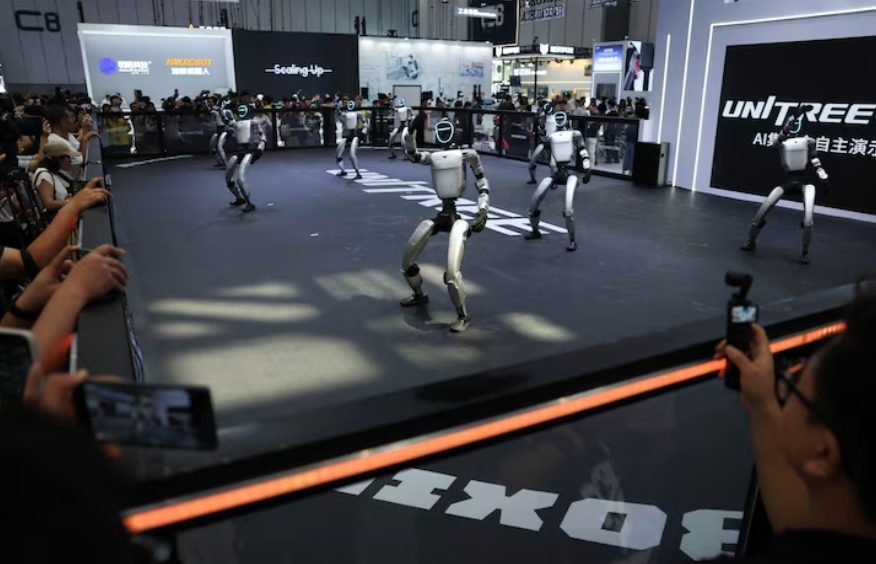
China’s humanoid robots are demonstrating remarkable advances in speed and athletic ability, but engineers say the bigger challenge is proving that the machines can perform ordinary, precision-based tasks reliably in the real world.
At the World Humanoid Robot Games in Beijing, robots are competing across 51 events, including sports and practical scenarios designed to replicate workplaces such as factories, warehouses and restaurants. More than 40% of the competitions require robots to operate fully autonomously.
The machines have already produced headline-making performances. Two robots reportedly ran the 100 metres faster than Usain Bolt’s 9.58-second world record, highlighting rapid improvements in robotic mobility and power.
However, competitions involving connecting cables, handling packages, charging electric vehicles and other fine-motor tasks may provide a more meaningful measure of progress. These challenges require robots to recognize objects, coordinate their movements and adapt when conditions are not perfect.
From Spectacle to Practical Use
Industry experts say the ultimate test for humanoid robotics will not simply be how fast a robot can run, but whether it can independently solve everyday problems without human assistance.
Cable connections, for example, can require precise hand movements and adjustments when a plug or socket is slightly misaligned. Such tasks test the combination of artificial intelligence, computer vision, dexterity and physical control needed for robots to become useful workers.
The Beijing games therefore offer a glimpse of both the rapid progress and remaining limitations of humanoid technology. As China and other countries compete to develop commercially viable robots, the focus is increasingly shifting from impressive demonstrations to machines capable of reliably performing useful jobs in factories, warehouses and service industries.
________________________________________________________________________________________________________________