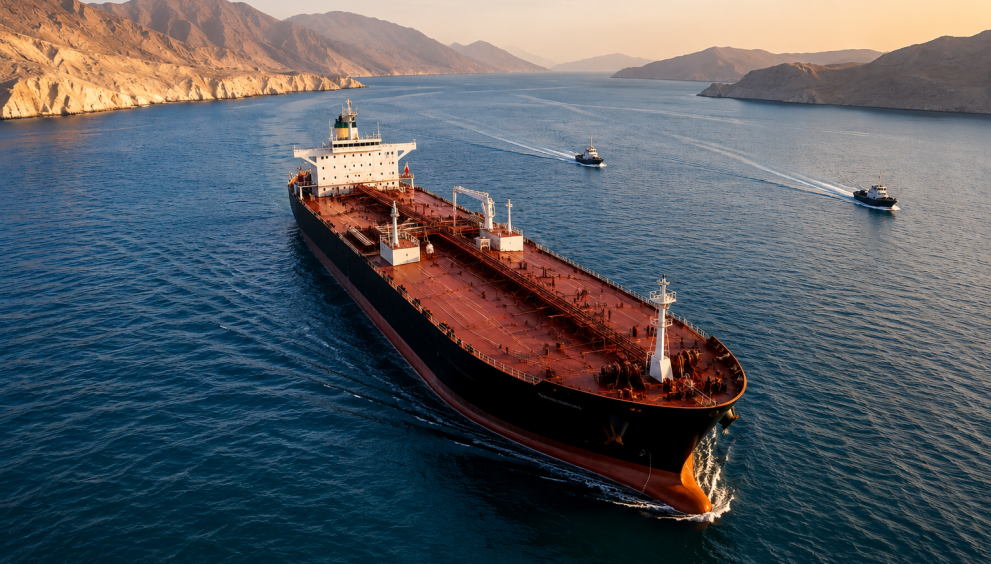
Iran has granted special permission for a number of Iraqi oil tankers to pass through the strategically vital Strait of Hormuz, providing limited relief to Iraq as shipping through the key energy corridor remains severely disrupted by the ongoing regional conflict.
Iran’s state news agency reported that Tehran approved the passage following repeated requests from Baghdad through several diplomatic channels. The issue was also raised during a recent visit to Iraq by Iranian Parliament Speaker Mohammad Baqer Qalibaf.
The authorization is significant for Iraq, which relies heavily on maritime routes through the Gulf to transport crude oil to international markets. Disruptions in the Strait of Hormuz have placed additional pressure on Iraq’s oil exports and increased the urgency of finding alternative routes.
Hormuz Shipping Remains Severely Disrupted
The Strait of Hormuz is one of the world’s most important energy chokepoints, historically carrying around one-fifth of global crude oil and liquefied natural gas shipments. However, maritime traffic has fallen sharply amid heightened security risks and the wider Iran conflict.
Reuters reported that only seven commodity ships crossed the strait on August 20, with no large crude-oil carriers or LNG tankers among them.
Iran maintains that it controls access through the waterway and has restricted shipping amid what it describes as hostile U.S. military actions. The United States, meanwhile, has continued to pressure Tehran while seeking to maintain energy flows through the region.
Iraq Explores Alternative Export Routes
Although the Iranian authorization could help some Iraqi shipments move, Baghdad is also working to reduce its dependence on the Strait of Hormuz. Iraqi authorities have been exploring increased exports through Turkey’s Ceyhan port, as well as potential routes through Syria’s Baniyas port and Jordan’s Aqaba port.
The limited reopening of a pathway for Iraqi tankers could therefore ease some immediate pressure, but it does not represent a full restoration of normal commercial shipping through Hormuz.
With the waterway still facing security threats and international tensions remaining high, oil markets and global shipping companies continue to closely monitor developments in the Gulf.
________________________________________________________________________________________________________________