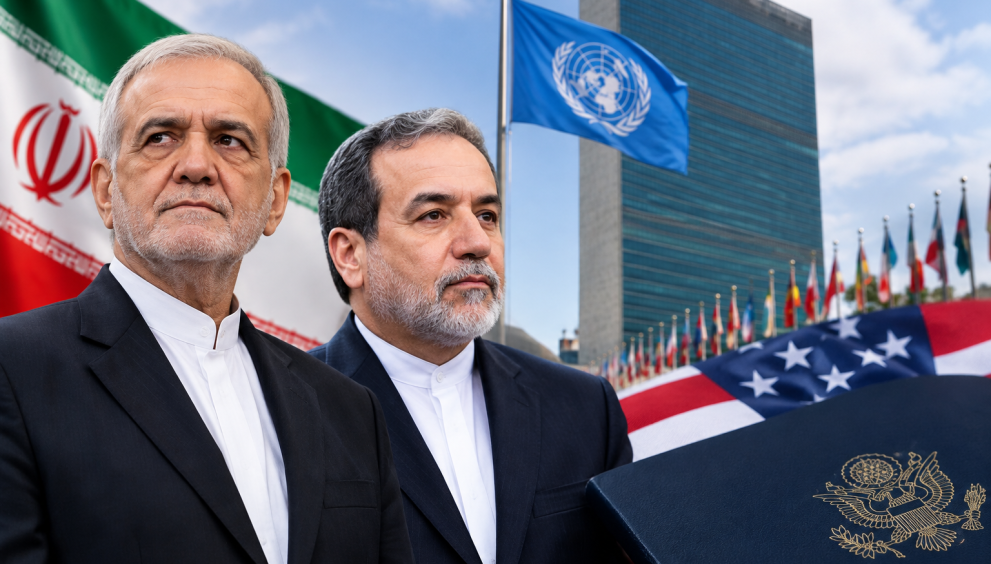
The United States has approved visas for Iran’s President Masoud Pezeshkian and Foreign Minister Abbas Araghchi to attend next week’s high-level session of the United Nations General Assembly in New York, despite the ongoing conflict between Washington and Tehran.
The U.S. State Department confirmed that Iran’s “core delegation” and essential staff will be permitted to participate in the 81st UN General Assembly High-Level Week. The delegation will, however, be smaller than in previous years and subject to travel restrictions and limits on the purchase of luxury and other goods.
Iranian Leaders Set to Attend
U.S. officials said the approved delegation includes President Pezeshkian and Foreign Minister Araghchi. Their attendance would provide Iran with an opportunity to present its position directly to world leaders and diplomats gathered at the United Nations.
The decision comes against the backdrop of more than six months of conflict between the United States and Iran, with tensions also affecting shipping and energy markets in the wider Middle East.
Washington Cites UN Host Obligations
The State Department said the decision was consistent with the United States’ obligations as host country of the United Nations headquarters.
The approval is notable because Washington has maintained extensive sanctions and other restrictions against Iran. At the same time, the United States has previously imposed strict conditions on Iranian delegations attending UN meetings, including limits on their movements outside the Iranian mission in New York.
UN Meeting Takes Place Amid Regional Tensions
The upcoming General Assembly will take place as the Iran-U.S. conflict continues and uncertainty remains over efforts to reopen the Strait of Hormuz and revive negotiations concerning Iran’s nuclear programme.
The Strait of Hormuz is a critical global energy route, and disruptions there have contributed to higher oil prices and broader concerns over international energy supplies.
The visa decision also comes shortly after Washington denied visas to Palestinian President Mahmoud Abbas and members of his delegation for the UN meeting, highlighting the different approaches the U.S. administration has taken toward delegations involved in the region’s conflicts.
Diplomatic Spotlight on New York
With Iranian and American officials expected to be present in New York, the UN General Assembly could become an important diplomatic forum for discussions surrounding the conflict, regional security, maritime trade and Iran’s nuclear programme.
The approval of the Iranian delegation’s visas does not itself indicate that a new diplomatic agreement between Washington and Tehran has been reached. Rather, it allows Iran’s senior leadership to participate in the UN’s principal annual gathering of world leaders.
________________________________________________________________________________________________________________