MEMORIAL EVENTS IN JOHANNESBURG REIGNITE NATIONAL OUTRAGE OVER GENDER-BASED VIOLENCE AND FEMICIDE
South Africans have gathered for memorial runs and protests following the deaths of nine women whose bodies were discovered in Ekurhuleni, east of Johannesburg, reigniting national anger over gender based violence and femicide.
The victims, mostly women in their 20s and 30s, were discovered over a period of two months. Police have said investigations are continuing to determine whether the cases are connected.
MEMORIAL RUNS HONOUR THE VICTIMS
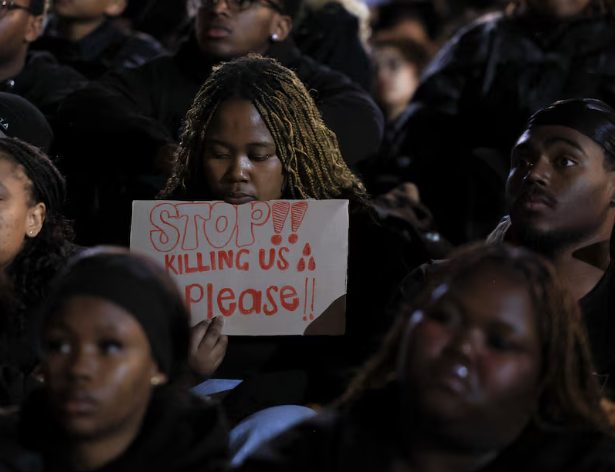
In Johannesburg, people dressed in black gathered for a memorial run honouring women killed in the region, including Elizabeth “Tsontso” Moselakgomo, whose death became one of the focal points of the public response.
Participants carried messages demanding greater protection for women, with activists calling for action against what they describe as a persistent national crisis.
The gatherings have also highlighted the circumstances under which women continue to experience fear in everyday activities, including travelling, working and exercising.
POLICE INVESTIGATIONS CONTINUE
The South African Police Service has established a multidisciplinary team to investigate the deaths and identify possible links between the cases.
SAPS confirmed on September 17 that the discovery of another woman’s body in Dawn Park brought the total number of bodies under investigation to nine.
The investigation has since produced a breakthrough. On September 21, police announced the arrest of three suspects one man and two women in connection with the murder of the ninth victim. The suspects were expected to appear before the Boksburg Magistrates’ Court. Police said all nine cases remain a priority.
WIDER ANGER OVER GENDER-BASED VIOLENCE
The killings have renewed attention on South Africa’s broader struggle with gender based violence.
Activists and civil society organisations have argued that women should not have to bear responsibility for avoiding violence through individual safety measures, calling instead for stronger institutional responses, effective policing and accountability.
Reuters reported that the latest killings have intensified concerns over women’s safety, while critics have pointed to longstanding challenges within the criminal justice system.
SAPS itself has acknowledged persistent challenges in responding to gender-based violence, including resource constraints, staff shortages and inconsistent enforcement of protection orders.
DEMANDS FOR SYSTEMIC CHANGE
The memorials have become more than tributes to the women who died. They have also become platforms for demands for safer communities and stronger action against perpetrators of violence.
President Cyril Ramaphosa has pledged that the investigations into the killings will be pursued thoroughly, while police leadership has promised to follow all available leads.
For families and campaigners, however, the latest arrests are only one part of a much broader demand for change.
The gatherings across South Africa reflect renewed calls for women to be able to move through their communities without fear, while authorities face continued pressure to strengthen investigations, prosecutions and preventative measures against gender-based violence.