The US Vice President says Washington has achieved its military objectives against Tehran and that President Trump is considering further military and diplomatic options to bring the conflict to an end.
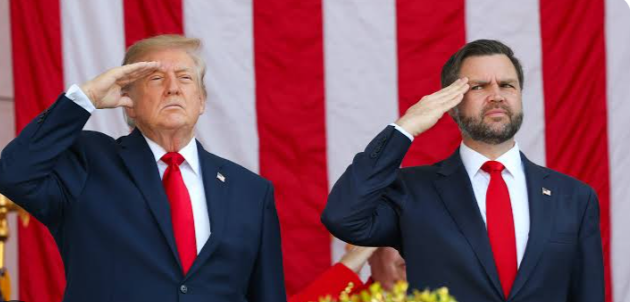
US Vice President JD Vance has defended President Donald Trump’s handling of the war with Iran, insisting that the United States will not allow the conflict to become another prolonged military engagement.
Speaking in an interview with on Monday, November 16, Vance accused what he described as “neoconservatives” and other foreign policy advocates of wanting the war to continue indefinitely.
He said the Trump administration had already achieved significant military objectives, claiming that US operations had destroyed Iran’s nuclear programme and conventional military capabilities.
Vance maintained that Trump has several options available as the administration considers how to bring the conflict to a conclusion. These include ending military operations or applying further military and diplomatic pressure on Tehran.
“The President of the United States has a lot of options,” Vance said, adding that Trump was considering what steps would ultimately bring the conflict to a resolution.
The Vice President also rejected suggestions of divisions within the administration over the war, insisting that he and Trump were aligned on the objective of ending the conflict without committing the United States to a prolonged military presence.
“We are not going to allow this to become a 10 or 15 year commitment, or frankly, even a two year commitment,” he said.
Vance reiterated that the administration had promised Americans there would be no more extended overseas wars, expressing confidence that Trump would eventually bring the conflict to an end with what he described as positive results for the American people.
His remarks come as the war continues to carry economic and political consequences for the United States. Vance acknowledged that higher petrol and energy prices had created a political cost for the administration.
Meanwhile, the US military presence in the Middle East remains significant. The arrival of the USS Theodore Roosevelt and its accompanying strike group in the region has added to questions about Washington’s next military steps as Trump weighs his options.
The comments also come amid continuing uncertainty over the future of Iran’s nuclear programme. Tehran has maintained its opposition to international demands for a complete suspension of uranium enrichment, while the International Atomic Energy Agency continues to face challenges in verifying the status of damaged nuclear facilities.
Vance’s statements signal the administration’s stated intention to avoid an open-ended war, even as it keeps further military and diplomatic measures under consideration. Whether those measures will lead to a negotiated settlement or another phase of military confrontation remains uncertain.