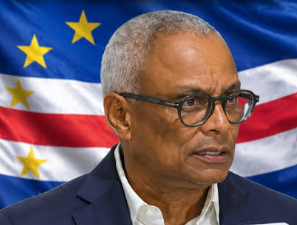
Incumbent wins decisive first-round victory as challenger Joana Rosa reflects on her historic candidacy, while low voter turnout raises concerns about electoral participation.
Cape Verde President José Maria Neves has secured re-election for a second five-year term following a decisive first-round victory in the country’s presidential election.
Provisional results showed Neves winning approximately 63.8% of the vote, comfortably exceeding the 50% threshold required to avoid a second round. His main challenger, former Justice Minister Joana Rosa, received 31.6%, while four other candidates each secured less than 1%.
Rosa conceded defeat and congratulated the incumbent, describing her participation in the election as a meaningful contribution to the country’s democratic development. As the first woman to contest Cape Verde’s presidency, she said her candidacy had helped open the way for greater equality and opportunities for women in public leadership.
Neves, meanwhile, pledged to serve all Cape Verdeans, both within the country and across its diaspora. In his victory address, he promised to promote national unity, strengthen democracy and pursue inclusive economic growth, with priorities including higher wages, poverty reduction and improvements in living conditions.
He also expressed his intention to build cross-party support for progress in areas such as housing, healthcare, education and employment.
The campaign had focused heavily on the challenges facing young people, particularly unemployment, the rising cost of living and the limited economic opportunities that have encouraged many Cape Verdeans to seek work abroad.
Despite the peaceful conduct of the election, low voter participation emerged as a significant concern. Preliminary figures indicated that only around 32% of registered voters cast their ballots.
Neves acknowledged the high abstention rate and suggested that population movements, emigration and outdated electoral registers may have contributed to the low participation. He called for the modernisation of the electoral system, including the possible introduction of electronic voting.
Cape Verde, an island nation off the west coast of Africa, is widely regarded as one of the continent’s more politically stable democracies, with a history of peaceful electoral processes and transfers of power.
Neves, 66, first became president in 2021 after previously serving as prime minister for 15 years. He belongs to the centre-left African Party for the Independence of Cape Verde (PAICV), while Rosa was backed by the centre-right Movement for Democracy (MpD).
Although the president serves as head of state, Cape Verde operates under a parliamentary system in which the prime minister leads the government and exercises most executive powers.
With a second term secured, Neves now faces the task of translating his promises of national unity and inclusive development into progress for citizens at home and abroad.