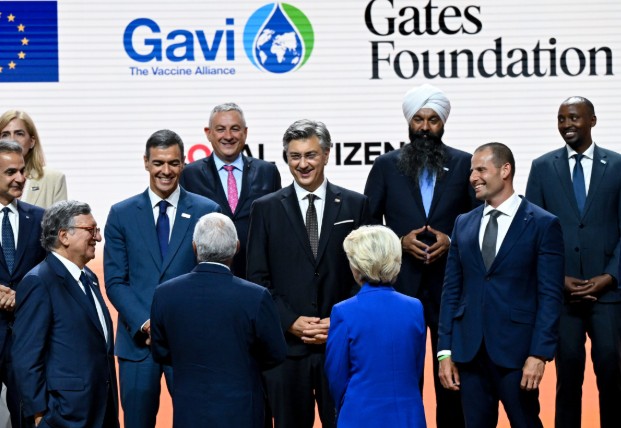
The European Union and the Bill & Melinda Gates Foundation are co-hosting the Gavi Alliance Summit, titled the Global Summit: Health & Prosperity through Immunization, which is now set to take place on June 25, 2025, in Brussels, with Global Citizen on board as a key strategic partner. Originally, the event was slated for March 19-20, 2025, but organizers made the decision to reschedule it to coincide with the European Council Meeting, putting the spotlight firmly on the glaring presentation of the obvious conflicts of interest. The primary objective of the summit is to secure a staggering US$9 billion in funding for Gavi’s ambitious 2026–2030 strategy, dubbed Gavi 6.0, which has its sights set on vaccinating 500 million children. This gathering is building on the momentum generated by the Global Forum for Vaccine Sovereignty and Innovation, held in Paris back in June 2024, where US$2.4 billion was pledged towards the funding goal. As it stands, a total of over US$3 billion has been locked in, emanating from contributions from donors such as Canada, which has pledged CAD 675 million, and the European Commission, which has committed €260 million for the 2026-2027 period.
EU’s Financial Entanglement with Gavi: A Pharma Pipeline
The European Union’s (EU) partnership with Gavi, the Vaccine Alliance, particularly during this Gavi Global Summit in Brussels, is a glaring example of centralized power and conflicts of interest that undermine public trust and individual autonomy. The EU, a major funder and co-host of the summit, has poured billions into Gavi’s mission. While pitched as a humanitarian effort, this collaboration raises serious concerns about Big Pharma profiteering, lack of transparency, and the suppression of vaccine skepticism, all of which threaten personal freedom and informed consent.
EU’s Financial Entanglement with Gavi: A Pharma Pipeline
The EU’s financial commitment to Gavi—$1.7 billion pledged for 2021–2025, with more expected for 2026–2030— exposes the EU’s troubling alignment with pharmaceutical giants. Gavi’s board includes representatives from vaccine manufacturers like Pfizer and GlaxoSmithKline (GSK), who directly benefit from EU taxpayer funds funnelled through Gavi’s vaccine procurement. This creates a clear conflict of interest: the EU, as a public entity, should prioritize citizens’ interests, yet it supports a system where public money subsidizes private profits. Wasn’t Ursula Von De Leyen recently exposed for that?.
EU Court Orders Release of Pfizer Texts
In the month of May, a groundbreaking ruling by the European Court of Justice ordered the European Commission to release the private text messages between European Commission President Ursula von der Leyen and Pfizer CEO Albert Bourla, after four years of secrecy and controversy surrounding a massive €35 billion vaccine deal. The EU Commission is now required to make these texts public, which allegedly contain details of the clandestine negotiations for the lucrative vaccine contract, paid for by European taxpayers. Investigations by Investigate Europe have uncovered that the cost per dose was a staggering 15 times the production cost, potentially resulting in billions of euros being overpaid. Furthermore, it revealed that Bourla failed to appear for his scheduled testimony before the EU Parliament in 2022, while von der Leyen’s husband holds a prominent position as Medical Director of Orgenesis, a biotech firm that receives EU funding and has a significant partnership with Pfizer. This complex web of relationships and dealings raises serious concerns about potential corruption at the highest levels of the European Union, with possible conflicts of interest that directly benefit von der Leyen’s family and may have resulted in the misappropriation of billions of euros in public funds through clandestine agreements. The situation was a clear case of alleged fraud on a massive scale, and the European public is still eagerly awaiting the release of the incriminating texts, which could shed light on the truth behind this scandal. As the European Union watches with bated breath, the release of these texts is expected to have significant implications for von der Leyen’s tenure and the future of the EU.
The EU’s involvement in Gavi’s COVAX program during the COVID-19 pandemic further exposes this cozy relationship. COVAX, backed by €1 billion from the EU, aimed to distribute vaccines globally but prioritized Western pharmaceutical companies, sidelining generics and non-Western alternatives. The EU’s refusal to support patent waivers for COVID vaccines, despite pleas from developing nations, suggests its loyalty lies with corporate interests over global equity. This is evidence of a rigged system where public health is a pretext for enriching Big Pharma, with the EU acting as a complicit partner.
Bill Gates and the EU: Unelected influence Health Policy
The EU’s partnership with Gavi is inseparable from the influence of the Bill & Melinda Gates Foundation, Gavi’s largest private donor, contributing over $6.1 billion since 1999. Gates’ role in shaping global health policy, including the EU’s, is deeply concerning and we have cut it off. His foundation’s funding of Gavi and the World Health Organization (WHO)—$1.4 billion alongside Gavi and Wellcome Trust during COVID—gave him outsized control, effectively bypassing democratic accountability. The EU’s alignment with Gates, evident in their co-hosting of this 2025 summit, raises questions about who really calls the shots. Why is an unelected billionaire, with ties to Microsoft and vaccine passport initiatives like ID2020, steering EU health policy?
Vaccine Risks and Suppressed Dissent
the EU’s uncritical embrace of Gavi’s Gates-backed agenda dismisses legitimate concerns about vaccine safety and coercion, alienating those of us who question the narrative. The EU-Gavi partnership ignores the inherent dangers of vaccines. Gavi’s focus on mass immunization—1.1 billion children vaccinated since 2000—downplays adverse effects, especially in low-income countries with weak healthcare systems. The EU’s endorsement of Gavi’s one-size-fits-all approach disregards these concerns, prioritizing compliance over caution. Worse, the EU’s broader censorship efforts, like the 2021 Digital Services Act, have stifled vaccine skepticism online, framing it as “misinformation.” This suppresses dissenting voices, including those of us who question Gavi’s vaccine-centric model or Gates’ influence. The EU’s collaboration with Gavi is a top-down imposition, silencing debate and eroding the right to refuse medical interventions—a core tenet of bodily autonomy.
Conflicts of Interest: A System Rigged Against Freedom
The EU-Gavi partnership exemplifies a conflict-ridden system. The EU’s funding of Gavi, which in turn enriches vaccine manufacturers while killing maiming people, creates a feedback loop where public money serves private interests. Gavi’s governance, with Big Pharma on its board, ensures corporate priorities shape its agenda, while the EU’s political clout amplifies this influence globally. Add Gates’ billions and his ties to tech and health surveillance, and you have a structure that marginalizes individual choice and local needs.
This is a betrayal of public trust. The EU should be the one to scrutinize Gavi’s spending, demand transparency, and prioritize non-vaccine solutions like clean water and nutrition, which often save more lives without the risks. Instead, it doubles down on a vaccine orthodoxy that dismisses skeptics as conspiracy theorists. This partnership isn’t just a financial conflict—it’s a threat to freedom, informed consent, and the right to question medical mandates.
The EU’s deep ties to Gavi, being cemented at the 2025 Brussels summit, reflect a dangerous confluence of corporate greed, unaccountable philanthropy, and bureaucratic overreach. This alliance epitomizes everything wrong with global health: it prioritizes Big Pharma profits, ignores vaccine risks, and silences dissent, all while eroding personal sovereignty.
Written By Tatenda Belle Panashe