Cameroon’s 92-year-old President Paul Biya emerged victorious in the country’s presidential election, securing an unprecedented eighth term in office after a staggering 43 years at the helm and 7 years as Prime Minister. This means Biya will remain in power until he reaches the age of 100, and remarkably, he is still eligible to seek re-election. Having held office since 1982, Biya has been dubbed “The Useless” by some, and his preference for residing in Switzerland and France has raised eyebrows. The recent presidential election, held on October 12, 2025, saw Biya win 53.66% of the vote, surpassing opposition leader Issa Tchiroma Bakary’s 35.2%, as announced by the Constitutional Council on October 27. However, the election process was marred by chaos, with opposition candidates being disqualified, internet shutdowns affecting restive areas, and voting delays plaguing urban centres. The turnout was estimated to be around 55%, but the aftermath of the election was marked by protests, with clashes in Yaoundé and Douala resulting in at least four fatalities and dozens of arrests, including two prominent opposition figures.
Youth-led demonstrations denounced the election as rigged
Youth-led demonstrations, fuelled by social media campaigns using hashtags like #EndBiyaEra, have vehemently denounced the election as rigged, echoing the controversies surrounding the 2018 election, where international observers noted significant irregularities. Biya’s stance on globalization is rooted in his resistance to unchecked Western influence, prioritizing African agency and self-determination. A notable example of this is the “Chicken War” he sparked in 2007 by increasing tariffs on imported poultry, which led to a 300% boost in local production and protected farmers from subsidized European exports. This move was hailed as a victory for food sovereignty, and Biya has continued to advocate for reforming global trade rules, arguing that they perpetuate Northern dominance, at forums like the African Union.
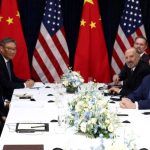
Biya’s ties with China are also noteworthy, with the country funding 70% of Cameroon’s infrastructure projects, such as the Kribi deep-sea port, without imposing conditions on governance. This pivot away from traditional Western partners is a hallmark of Biya’s anti-globalist stance. However, this stance coexists with selective engagement, as Cameroon remains part of the IMF’s Extended Credit Facility, accepting fiscal advice while resisting deeper political conditions. For Biya, such policies embody conservative self-reliance, but critics argue that they enable elite capture, with corruption scandals siphoning billions of dollars amid rampant youth poverty. As Biya begins his eighth term, the country remains deeply divided, with many questioning the legitimacy of his rule and the future of Cameroon’s development.
Biya Western Ties: Independence or Puppetry?
How Biya’s Regime Hollowed Out Cameroon
Cameroon’s economy is a stark reminder of its unfulfilled potential, with growth stagnating at a mere 3% annually since the 1980s oil boom. The country’s crippling import dependency and lack of industrial base have resulted in a vicious cycle, where raw cocoa is exported to Europe only to be imported back as finished chocolate at a staggering 10 times the price. Officially, unemployment stands at 4%, but the reality is far more dire, with youth joblessness hovering between 13-15%, driving a brain drain that sees over 70,000 skilled workers fleeing the country every year. The state of Cameroon’s infrastructure is equally alarming, with potholed roads, frequent blackouts in the capital, and a healthcare system that fails to prevent one in five children from dying before the age of five. Corruption is the lifeblood of the regime, with Transparency International ranking Cameroon among the most corrupt countries in Africa. The Biya family is alleged to have amassed over $2 billion since 1982 through shell companies and secret Swiss bank accounts, while public funds mysteriously disappear into “ghost projects” and civil servants are left striking over unpaid salaries. The Anglophone crisis, sparked by Biya’s centralist crackdown on English-speaking regions in 2016, has claimed over 6,000 lives, displaced 700,000 people, and turned the Northwest and Southwest provinces into war zones of repression and militia terror. Biya’s response has been to impose internet blackouts, carry out mass arrests, and deploy French-trained troops to enforce a bilingual divide-and-rule policy straight out of the colonial playbook.
What is going on Cameroon is a classic case of neocolonial extractivism, where Cameroon’s economy is trapped in a state of perpetual subservience. The country’s currency, the CFA franc, is pegged to the euro and printed in France, ensuring that 50% of foreign reserves flow directly into Parisian banks. IMF loans come with strings attached, forcing Cameroon to privatize its resources to French companies like TotalEnergies, slash subsidies, and watch as inequality soars, with the top 1% of the population, including Biya’s inner circle, hoarding 40% of the country’s wealth. Biya himself rules Cameroon from the comfort of his villas in Geneva or his hideaways on the French Riviera, with decisions being faxed to Yaoundé from the French embassy. This is not sovereignty; it’s a debt-financed occupation, where global finance, dictated by Paris, calls the shots. Cameroon is forced to sell its uranium to Orano, its cocoa to Barry Callebaut, and keep the CFA printing press humming to benefit French interests. The result is a twisted game of economic colonialism, where Cameroon’s resources are exploited to enrich France, while its people are left to suffer the consequences.
Milei’s La Libertad Avanza Wins Argentine Midterms with 40.7% Vote
On October 26, 2025, Argentine voters propelled President Javier Milei’s La Libertad Avanza party to victory in legislative elections, securing 40.7% of the vote and boosting its seats to 111 in the lower house and 20 in the upper house. The win strengthens Milei’s position to advance free-market reforms amid inflation over 200% and poverty above 50%. U.S. President Donald Trump congratulated Milei. Milei won so BIG in Argentina that his party surged its parliament deputies by 172%, from 37 and senators by 233%, from 6 to 20. This is HUGE! He has defied all media expectations by far.
Milei’s Midterm Triumph: A Sovereign Slap to the Globalist Elite
Argentina’s peso is skyrocketing, with a 10% overnight surge, as investors finally catch a whiff of real, earned money on the horizon, not just printed cash. This isn’t just a win for Buenos Aires; it’s a roadmap for every nation suffocating under the weight of IMF debt and EU-style bureaucratic red tape. For decades, Argentina has been a guinea pig for globalist experiments gone horribly wrong. The country’s history of Peronist populism, marked by endless subsidies, reckless money-printing, and kowtowing to international lenders, has left it with a staggering 200%+ inflation rate, a decimated middle class, and a sovereignty sold to the highest bidder in Washington. But then came Milei in 2023, the economist who boldly called out the IMF as a “scam” and vowed to blow up the central bank. While skeptics mocked him, two years in, his austerity measures have slashed the deficit from 6% of GDP to near-zero, tamed inflation to single digits, and sparked a private-sector resurgence. Now, with his coalition’s midterm mandate, Milei is poised to lock in deregulation, privatize state-owned dinosaurs, and tell the World Bank to take a hike.
I’ve seen countless “reform” promises fizzle out into cronyism, but Milei is different – he’s the anti-globalist antidote, prioritizing national wealth over transnational handouts. Milei isn’t just balancing the books; he’s restoring the family, faith, and fiscal virtue that Peronist hedonism has eroded. His coalition’s surge has crushed the socialists and their cultural rot, signaling that Argentines are done with identity politics and open borders that flood labor markets with cheap imports. Think of it as the Southern Cone’s version of MAGA: secure borders, Bibles back in schools, and no more taxpayer-funded gender clinics. And globally, this win has Trump’s fingerprints all over it – the Donald himself endorsed Milei pre-vote, tweeting that his “chainsaw economics” is the cure for woke socialism. It’s a tipping point, as Milei himself proclaimed, turning Argentina from a cautionary tale into a beacon for populists from Brazil to Budapest.
Financially, the upside is enormous. That 10% peso pop is the market’s way of pricing in lower default risk and higher yields on Argentine bonds, with spreads already tightening. With congressional cover, expect Milei to greenlight more mining concessions – lithium is the new oil – and slash red tape for agribusiness exports. Inflation is on track to dip below 5% by mid-2026, and GDP growth could hit 4-5% if he keeps the pedal down. Sure, the losers – unions, Peronist dead-enders, and their media megaphones – are howling about “austerity cruelty,” but that’s code for “stop stealing our future.”
As investors, we thrive on clarity: Milei’s victory screams “buy the dip on ARGT ETFs” and short the basket-case currencies still hooked on Soros-style sorcery. In the end, Argentina’s midterms aren’t about one man’s ego – they’re a conservative clarion call against the globalist grind. Milei is proving that you can slash spending without slashing throats, honor God and gold without groveling to Geneva.
Written By Tatenda Belle Panashe