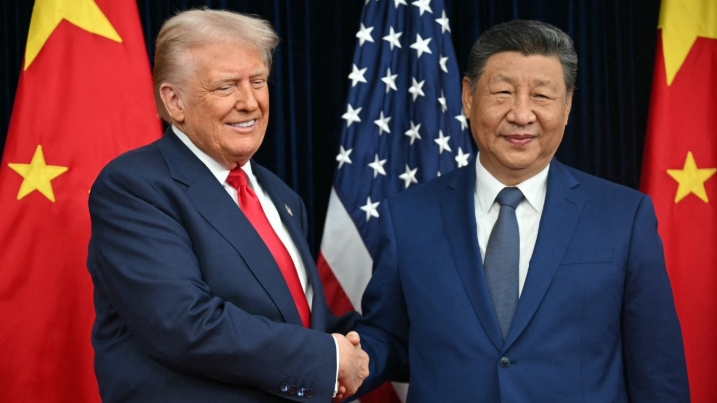
Taiwan has emerged as the top priority for China ahead of a highly anticipated summit between Donald Trump and Xi Jinping, setting the stage for a tense and consequential diplomatic encounter that could reshape global geopolitics.
The meeting, expected in the coming weeks, comes at a time of heightened friction between the world’s two largest economies, with disputes spanning trade, technology and security but none more sensitive than the future of Taiwan.
Taiwan at the Core of Beijing’s Strategy
Chinese officials have made it clear that Taiwan will dominate discussions, marking a shift from previous engagements where the issue was downplayed. Beijing is pressing Washington to adopt stronger language opposing Taiwanese independence, a longstanding red line for China.
For China, Taiwan is not just a territorial issue but a central pillar of national sovereignty. Beijing views the self-governing island as a breakaway province and has intensified diplomatic, economic and military pressure in recent years to assert its claim.
Analysts say China is unlikely to seek a dramatic breakthrough at the summit but will instead push for incremental concessions that could gradually weaken ties between Washington and Taipei.
U.S. Stance: Strategic Ambiguity Under Scrutiny
The United States has long maintained a delicate balance under the Taiwan Relations Act supporting Taiwan’s defense while officially recognizing Beijing. However, concerns are growing that Trump’s deal-oriented approach to diplomacy could introduce uncertainty into that framework.
Taiwanese officials are closely watching the talks, wary that economic incentives such as Chinese purchases of U.S. goods could be leveraged in exchange for shifts in U.S. policy.
Despite these concerns, Washington has recently approved significant arms sales to Taiwan and reiterated its commitment to the island’s security, signaling continuity even as rhetoric evolves.
Broader Agenda: Trade, Technology and Security
While Taiwan is expected to dominate, the summit agenda also includes contentious issues such as tariffs, supply chains and the flow of advanced technologies.
The two nations remain locked in strategic competition, particularly over semiconductors an area where Taiwan plays a crucial global role. Control over supply chains and technological leadership has elevated the island’s importance beyond regional politics to global economic security.
Rising Tensions and Military Signaling
In parallel with diplomatic efforts, China has ramped up military drills near Taiwan, underscoring the risks of escalation. These actions are widely seen as both a warning to Taipei and a signal to Washington ahead of negotiations.
Security experts warn that any miscalculation could trigger a broader conflict, making the summit one of the most closely watched diplomatic events of the year.
High-Stakes Diplomacy
Preparations for the summit are already underway, with both sides carefully managing optics, messaging and protocol an indication of how sensitive the meeting is.
The outcome could have far-reaching implications, not only for U.S.-China relations but also for allies across Asia and the global economy.
Outlook
As the summit approaches, Taiwan’s future hangs in the balance. While both Washington and Beijing are expected to avoid overt confrontation, the negotiations will likely shape the trajectory of one of the world’s most dangerous geopolitical flashpoints.
Whether the meeting leads to stabilization or further tension remains uncertain but one thing is clear: Taiwan is no longer a side issue. It is now at the very heart of U.S.-China relations.
________________________________________________________________________________________________________________