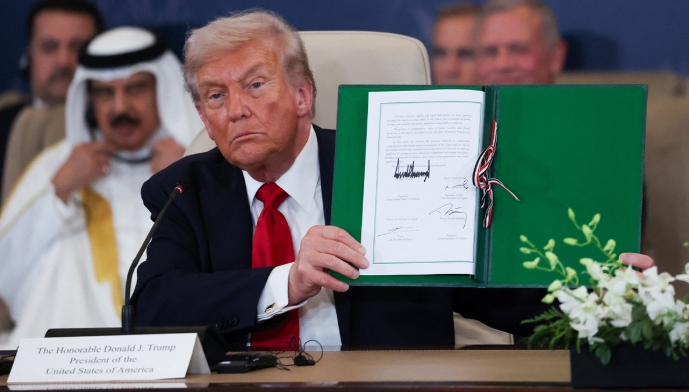
Donald Trump has intensified pressure on Iran to agree to a nuclear deal, even as reports indicate the United States is preparing to extend its naval blockade of Iranian ports raising fears of a prolonged geopolitical and economic standoff.
In a series of public remarks and social media posts this week, Trump urged Tehran to “get smart” and finalize an agreement that would halt its nuclear ambitions. The call comes amid mounting frustration within the White House over stalled negotiations and what U.S. officials describe as insufficient proposals from Iran.
Push for a Deal Amid Stalled Talks
According to U.S. officials, the Trump administration is demanding that Iran abandon its nuclear program and guarantee free passage for global oil shipments through the Strait of Hormuz one of the world’s most critical energy chokepoints.
However, negotiations remain deadlocked. Iran has reportedly pushed for a phased approach that prioritizes reopening the strategic waterway before addressing nuclear concerns an offer Washington has rejected as inadequate.
Trump has publicly criticized Iran’s leadership for failing to reach a unified position, suggesting internal divisions in Tehran are complicating diplomacy.
Plans to Extend the Blockade
At the same time, reports from U.S. media indicate Trump has instructed aides to prepare for an extended or even indefinite naval blockade targeting Iranian oil exports.
The blockade launched earlier in April following failed peace talks has significantly curtailed Iran’s ability to export crude oil, costing the country heavily in lost revenue and increasing pressure on its economy.
While the strategy is designed to force Iran back to the negotiating table without escalating into full-scale war, it risks prolonging the conflict and heightening regional tensions.
Global Economic Impact
Markets have already begun reacting to the possibility of a prolonged blockade. Oil prices surged to a one-month high, with Brent crude rising sharply amid concerns over disrupted supply routes in the Middle East.
Analysts warn that continued instability in the Strait of Hormuz could fuel inflation, disrupt global trade, and strain economies heavily dependent on energy imports.
Conflicting Signals and Uncertainty
Adding to the uncertainty, Trump has claimed that Iran is eager to reopen the Strait of Hormuz and may be seeking a deal, though there has been no independent confirmation from Tehran.
Behind the scenes, U.S. officials remain divided. Some advisers favor maintaining maximum pressure through the blockade, while others warn of economic fallout and the risk of unintended escalation.
Outlook
With the conflict now stretching beyond two months, the situation appears locked in a fragile stalemate. The United States is betting that sustained economic pressure will force Iran to concede, while Tehran continues to resist demands it views as excessive.
For now, prospects for a breakthrough remain uncertain, with both sides holding firm and the global economy watching closely as tensions in one of the world’s most strategic regions continue to rise.
________________________________________________________________________________________________________________