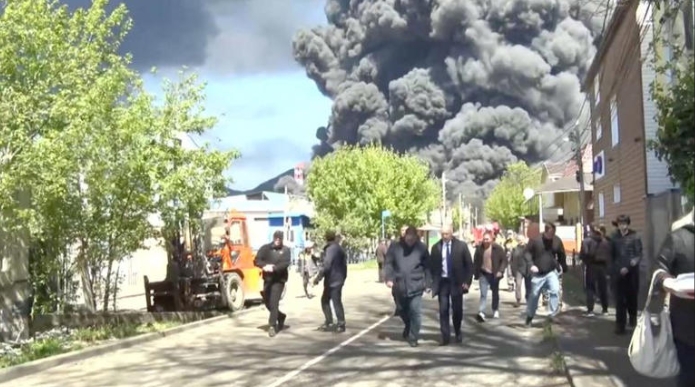
In Russia a major environmental and public health crisis is unfolding in the southern Russian port city of Tuapse after a series of drone strikes on a key oil refinery left behind widespread toxic contamination, disrupted daily life and raised concerns over long-term ecological damage.
Toxic fallout grips Black Sea city
Authorities in Tuapse say the immediate fires triggered by the latest strike have been extinguished, but the aftermath is proving far more difficult to contain. Oil has leaked into nearby waterways and the Black Sea, while hazardous chemicals including benzene have polluted the air, prompting urgent health warnings.
Residents have been advised to stay indoors, keep windows closed and avoid using tap water. Schools have been shut, public events canceled and emergency crews deployed to manage the contamination.
Cleanup efforts are already underway, with thousands of cubic meters of polluted soil and debris removed from affected areas. However, officials acknowledge that full recovery could take weeks or longer.
“Black rain” and air pollution spark fear
Locals have reported disturbing environmental effects, including what has been described as “black rain” precipitation mixed with soot and oil residue coating buildings, cars and vegetation.
Residents have also complained of a strong smell of fuel and difficulty breathing, with some describing the situation as “breathing oil.”
Environmental experts warn that such exposure could have lasting health implications, particularly for vulnerable populations such as children and the elderly.
Repeated strikes intensify damage
The latest incident marks the third attack on the Tuapse refinery in recent weeks, part of an escalating campaign targeting Russia’s energy infrastructure. Each strike has reignited fires and compounded the environmental damage, making containment increasingly challenging.
The refinery a key export hub on the Black Sea has halted operations, dealing a blow to regional energy logistics and local employment.
Economic and regional impact
Beyond the immediate environmental crisis, the attacks are beginning to ripple through the local economy. Tourism in the Krasnodar region has declined sharply, with travelers deterred by pollution, fires, and safety concerns.
The contamination of beaches and coastal waters threatens not only the environment but also industries dependent on the Black Sea, including fishing and hospitality.
Strategic context: war reaches deeper into Russia
Ukraine has not officially commented on every individual strike but has previously indicated that targeting oil infrastructure is aimed at weakening Russia’s war funding capacity.
Analysts say the repeated attacks highlight a shift in the conflict, bringing the consequences of war deeper into Russian territory and increasingly affecting civilian areas and critical infrastructure.
Uncertain road to recovery
While Russian officials insist the situation is under control, skepticism remains among residents, many of whom continue to express concern over air quality, water safety and long-term environmental risks.
With contamination still spreading and cleanup ongoing, Tuapse now faces not only the immediate aftermath of the refinery attack but also the longer-term challenge of rebuilding a city grappling with the toxic legacy of war.