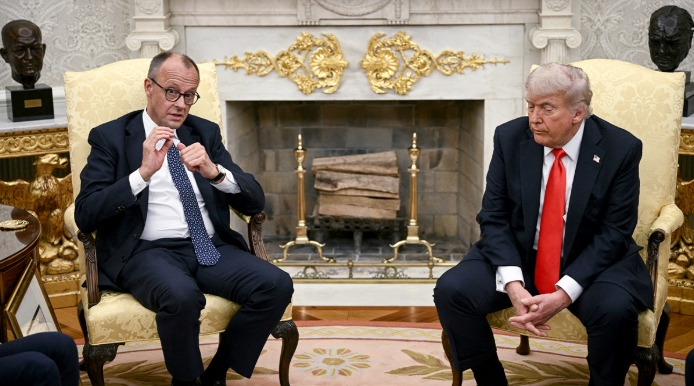
A sharp diplomatic rift has emerged between Donald Trump and Friedrich Merz after the U.S. president publicly told the German leader to stop “interfering” in efforts to confront Iran, intensifying tensions among Western allies over the ongoing Middle East crisis.
Trump rebukes Merz over Iran comments
In a strongly worded post on his Truth Social platform, Trump criticized Merz for weighing in on U.S.-led efforts to address Iran’s nuclear ambitions and the broader conflict, which has now stretched beyond two months.
Trump accused the German chancellor of lacking understanding of the situation and urged him to focus on domestic and regional challenges instead. He argued that U.S. actions aimed at curbing Iran’s nuclear program were essential for global security, including Europe.
The U.S. leader went further, telling Merz to spend “less time interfering” in Iran-related matters and more time addressing issues within Germany, including immigration, energy, and the war in Ukraine.
Background: Merz criticism sparks clash
The dispute follows recent remarks by Merz suggesting that Iran had been “humiliating” the United States during stalled diplomatic efforts, a comment that angered Washington.
Merz has also criticized the lack of a clear U.S. strategy in the Iran conflict and raised concerns about its economic and security impact on Europe, particularly disruptions linked to the Strait of Hormuz.
Trump, however, rejected those criticisms, at one point accusing the German leader of misunderstanding U.S. policy and mischaracterizing his stance on Iran’s nuclear ambitions.
Rising tensions within NATO allies
The exchange highlights growing divisions between the United States and key European allies over how to handle Iran. Trump has repeatedly expressed frustration with NATO partners, accusing them of insufficient support during the conflict.
In the latest escalation, Trump also suggested he may review the number of U.S. troops stationed in Germany a move that could have significant implications for NATO’s military posture in Europe.
German officials have sought to downplay the spat, emphasizing the importance of transatlantic ties and NATO cooperation. Merz, speaking during a military visit, reaffirmed Germany’s commitment to the alliance while maintaining his criticism of Iran’s actions.
Broader geopolitical implications
Analysts say the public exchange underscores deeper disagreements over strategy in the Middle East and Europe’s role in global security. While Washington has taken a more aggressive stance toward Iran, European leaders have pushed for clearer diplomatic pathways and greater coordination.
The dispute also comes at a sensitive moment, as the Iran conflict continues to strain global energy markets and security arrangements, with no clear resolution in sight.
Outlook
Despite the heated rhetoric, both sides appear keen to avoid a complete breakdown in relations. However, the increasingly personal tone of the exchanges between Trump and Merz signals a challenging period ahead for U.S.-European diplomacy particularly as the Iran crisis deepens and divisions over strategy persist.
________________________________________________________________________________________________________________