The administration of Donald Trump is preparing to unveil criminal charges against former Cuban leader Raúl Castro next Wednesday in what officials describe as a dramatic escalation of Washington’s campaign against Cuba’s communist government.
According to a U.S. Justice Department official familiar with the matter, federal prosecutors are expected to unseal an indictment in Miami on May 20 tied to the 1996 shootdown of planes operated by the exile group Brothers to the Rescue.
The indictment still requires approval from a federal grand jury before it can be formally announced, the official said.
Charges Linked to 1996 Plane Shootdown
The case centers on one of the most controversial episodes in modern U.S.-Cuba relations. In February 1996, Cuban fighter jets shot down two civilian aircraft flown by the Miami-based humanitarian organization Brothers to the Rescue, killing four people, including three U.S. citizens.
At the time, Cuba argued the planes had violated Cuban airspace and said the military action was justified. The United States condemned the attack as unlawful and responded with sanctions but stopped short of pursuing criminal charges against top Cuban leaders.
Raúl Castro was serving as Cuba’s defense minister during the incident and was widely viewed as overseeing the country’s armed forces.
The upcoming announcement is expected to coincide with a memorial event in Miami honoring the victims of the 1996 attack, according to invitations reviewed by Reuters.
Renewed U.S.-Cuba Tensions
The move comes amid sharply worsening relations between Washington and Havana under Trump’s renewed hardline approach toward Cuba. The administration has intensified sanctions and pressured countries supplying fuel to the island, contributing to severe energy shortages and blackouts across Cuba.
Senior U.S. officials have openly criticized Cuba’s communist leadership and signaled support for sweeping political reforms on the island.
CIA Director John Ratcliffe recently traveled to Havana for rare high-level talks, warning Cuban officials that the United States would only engage economically and diplomatically if the government made “fundamental changes.”
Trump has also increased rhetorical pressure on Havana, reportedly telling advisers earlier this year that “Cuba is next” after U.S. actions against Venezuela.
Echoes of Maduro Prosecution
Analysts say the planned indictment resembles the Trump administration’s strategy toward former Venezuelan president Nicolás Maduro, who faced U.S. drug trafficking charges before being captured and brought to the United States earlier this year.
The Justice Department’s Miami office, led by federal prosecutor Jason Reding Quiñones, has taken a leading role in investigations involving Cuba and other Latin American governments viewed as hostile to Washington.
Experts caution that even if charges are filed, the chances of extraditing Castro are virtually nonexistent while he remains in Cuba. However, the symbolic impact could further inflame tensions between the two countries and energize Cuban-American political groups in Florida.
Cuba Yet to Respond Publicly
Neither Cuba’s Foreign Ministry nor Raúl Castro has publicly commented on the reported plans. The U.S. Justice Department has also declined official comment ahead of the expected announcement.
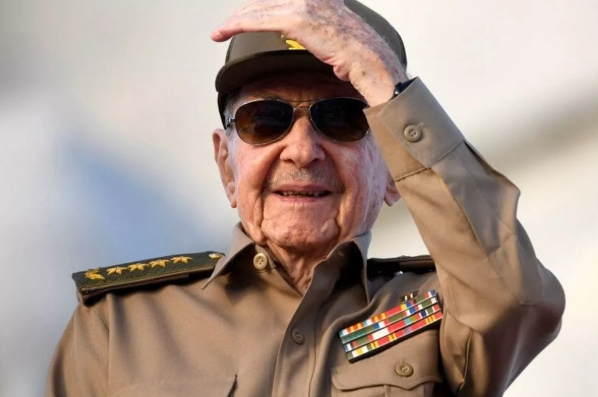
Raúl Castro, now 94, formally stepped down as Cuba’s president in 2018 and relinquished leadership of the Communist Party in 2021, though analysts believe he continues to wield significant influence behind the scenes.
________________________________________________________________________________________________________________