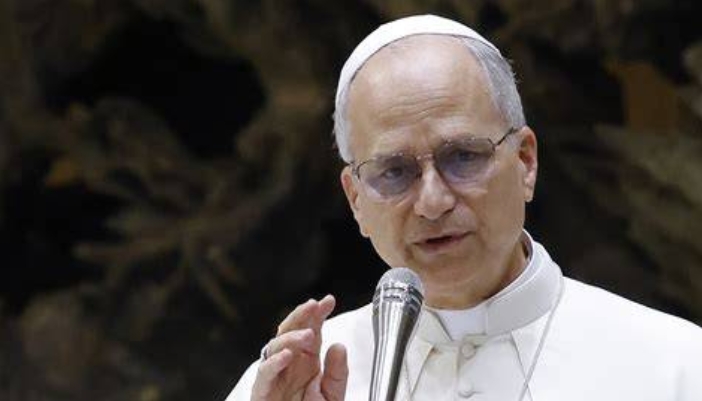
Vatican Signals Major Shift in Teaching on War
Pope Leo has called for a dramatic reassessment of the Catholic Church’s long-standing “just war” doctrine, signaling what Vatican observers describe as one of the most significant theological shifts in modern Church history.
In a recent address to diplomats and religious leaders at the Vatican, the pontiff argued that the traditional framework used to justify armed conflict under specific moral conditions has been increasingly misused by political leaders to legitimize modern warfare.
He urged a renewed global commitment to peace-building, diplomacy, and conflict prevention, stating that war can no longer be treated as a “regulated moral option” in a nuclear and technologically advanced age.
Questioning Centuries-Old “Just War” Tradition
The Catholic Church’s just war theory has historically provided moral guidelines under which military force could be considered ethically permissible, including conditions such as self-defense, legitimate authority, proportionality, and last resort.
However, Pope Leo suggested that in today’s geopolitical environment, these criteria are often interpreted too loosely, weakening their moral force and opening the door to prolonged and devastating conflicts.
Vatican officials close to the Pope say the move reflects growing concern within the Church about the humanitarian consequences of recent wars and the increasing destructiveness of modern weapons systems.
Call for a “Peace First” Global Ethic
Instead of focusing on moral justification for war, Pope Leo has reportedly emphasized the need for a “peace-first ethic” rooted in diplomacy, economic justice, and international cooperation.
He encouraged global leaders to invest more heavily in conflict prevention mechanisms and humanitarian diplomacy, arguing that preventing war must take priority over defining when war is acceptable.
The Pope also warned that the world risks normalizing violence if moral frameworks continue to provide what critics describe as a “permission slip” for military intervention.
Reactions Within the Catholic Church
The remarks have sparked intense discussion within the global Catholic community.
Progressive theologians have largely welcomed the Pope’s comments, saying they reflect the urgent need to update moral teaching in light of modern warfare, including cyber conflict, drone strikes, and nuclear deterrence.
However, some conservative scholars argue that abandoning or significantly weakening the just war doctrine could create a moral vacuum, leaving states without ethical guidance in situations of self-defense or humanitarian intervention.
Church officials have emphasized that no formal doctrinal change has yet been announced, and that discussions are ongoing within Vatican theological commissions.
Global Leaders Respond Cautiously
Political reactions to the Pope’s remarks have been mixed.
Some international diplomats have praised the emphasis on peace and conflict prevention, particularly amid ongoing global tensions in Europe, the Middle East, and parts of Africa.
Others have noted that while the moral appeal is powerful, governments still face practical security challenges that require defense policies and, in some cases, military action.
Analysts say the Pope’s intervention could influence global debates on war ethics, particularly in multilateral institutions and peace negotiations.
Broader Context of Rising Global Conflicts
The Pope’s comments come at a time of heightened international instability, with multiple active conflicts and rising military spending worldwide.
Humanitarian organizations have repeatedly warned about the growing civilian toll of modern warfare and the limitations of existing international legal frameworks in preventing escalation.
Within this context, the Vatican appears to be positioning itself more forcefully as a moral voice calling for de-escalation and diplomatic resolution of disputes.
A Defining Moment for Vatican Diplomacy
Observers say Pope Leo’s stance could mark a defining moment for the Catholic Church’s role in global affairs, shifting it further toward active peace advocacy and away from traditional justifications of armed conflict.
While formal doctrinal changes would require extensive theological review, the Pope’s remarks are expected to influence ongoing discussions within the Church and beyond.
For now, the Vatican’s message is clear: in an era of increasingly destructive warfare, the moral cost of conflict may be too high for traditional frameworks to justify.
________________________________________________________________________________________________________________