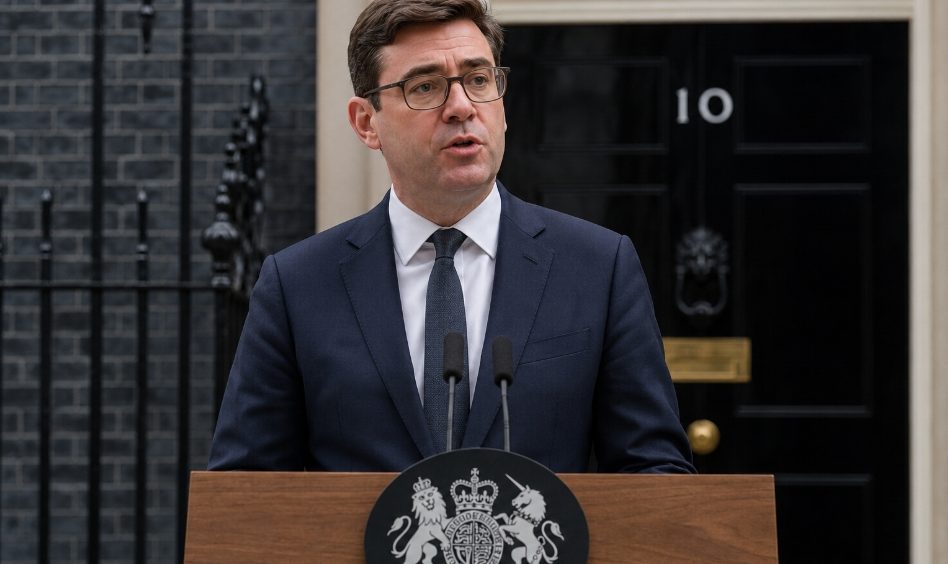
Andy Burnham has officially become the United Kingdom’s new Prime Minister, promising to restore public trust, tackle the country’s cost-of-living crisis, and launch what he described as a long-term national renewal after years of political instability.
Burnham assumed office after the resignation of former Prime Minister Keir Starmer, becoming Britain’s seventh prime minister in just over a decade. Standing outside 10 Downing Street following an audience with King Charles III at Buckingham Palace, Burnham declared that his government would focus on “rebuilding Britain” and “bringing hope back” to communities that have felt neglected for years.
A Promise to End Political Instability
In his first address as prime minister, Burnham acknowledged widespread frustration with British politics and pledged to lead a government focused on stability rather than short-term political battles.
He said the country had experienced too much uncertainty over the past decade and argued that Britain now needs consistent leadership capable of delivering meaningful change.
Burnham described his administration as the beginning of a “new era,” promising to unite the country while rebuilding confidence in government institutions and public services.
Cost-of-Living Relief Tops Agenda
The new prime minister identified the rising cost of living as his government’s most urgent priority.
He announced that immediate measures would be introduced within days to help struggling households, with proposals expected to include:
- Lower household energy bills
- Reduced public transport costs, including bus fares
- Additional support for working families
- Policies aimed at easing financial pressure without increasing taxes on working people
Burnham stressed that any assistance package would be fully funded and implemented while maintaining fiscal discipline.
He reiterated that his government would continue to respect existing fiscal rules and would avoid excessive borrowing, saying economic stability remained essential for long-term growth.
A 10-Year Plan for National Renewal
Beyond immediate relief, Burnham unveiled plans for a comprehensive 10-year strategy designed to reshape Britain’s economy and public services.
His vision includes:
- Reindustrialising Britain’s manufacturing base
- Investing in infrastructure
- Expanding regional economic development
- Decentralising power away from Westminster
- Strengthening local government authority
- Modernising transport, housing, energy and education
Drawing on his experience as Mayor of Greater Manchester, Burnham argued that communities outside London should receive greater control over economic development and public investment.
He said decades of over-centralisation had left many regions behind and pledged to reverse that trend through expanded devolution.
Ending Rough Sleeping
One of Burnham’s clearest commitments was a pledge to end rough sleeping across England.
Having previously prioritised homelessness initiatives in Greater Manchester, he said tackling homelessness would become a national mission under his government.
Housing policy is expected to play a major role in the administration’s agenda, alongside plans to increase affordable housing construction and strengthen local community support services.
New Cabinet Signals Fresh Direction
Burnham also announced a significant Cabinet reshuffle aimed at signalling a break from the previous administration.
Among the key appointments:
- John Healey becomes Chancellor
- Ed Miliband is appointed Foreign Secretary
- Yvette Cooper takes over as Health Secretary
- Wes Streeting becomes Defence Secretary
- Shabana Mahmood remains Home Secretary
- Angela Rayner returns as Housing Secretary
Several senior ministers from Keir Starmer’s government were replaced as Burnham assembled a team aligned with his vision for economic renewal and regional investment.
Economic Challenges Remain
Despite the ambitious agenda, Burnham inherits significant economic challenges.
Britain continues to face sluggish economic growth, pressure on public finances, high housing costs and persistent concerns over productivity.
The government must also balance increased defence spending commitments while remaining within self-imposed fiscal rules.
Burnham acknowledged these difficulties but insisted reforms would focus on sustainable long-term investment rather than short-term spending increases.
International Relations
The new prime minister has already begun engaging with international partners, holding early discussions with key allies including Ukrainian President Volodymyr Zelensky and U.S. President Donald Trump.
Observers say Burnham is expected to maintain Britain’s support for Ukraine while seeking stronger economic cooperation with allies as part of his broader growth strategy.
Looking Ahead
Andy Burnham’s arrival at Downing Street marks one of the most significant political transitions in recent British history.
His government now faces the challenge of translating ambitious promises into measurable improvements for households grappling with high living costs, strained public services and slowing economic growth.
Whether Burnham’s emphasis on regional empowerment, economic renewal and political stability can restore public confidence will likely define both his premiership and the future direction of British politics.
________________________________________________________________________________________________________________