

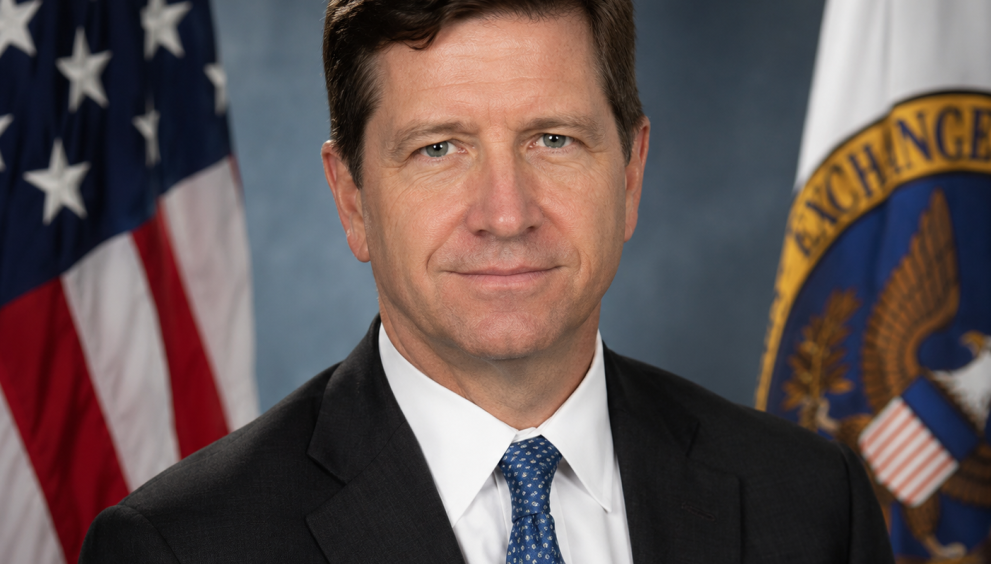
Senate-confirmed former SEC chairman takes charge of America’s intelligence community amid growing global security challenges
Jay Clayton has officially been sworn in as the new Director of National Intelligence (DNI), taking charge of the United States intelligence community at a time of heightened geopolitical tensions, cyber threats, and increasing concerns over foreign interference and national security.
Clayton took the oath of office in Washington following his confirmation by the U.S. Senate, becoming the country’s top intelligence official and principal intelligence adviser to the president. The ceremony was attended by senior administration officials, lawmakers, intelligence leaders, and members of the national security establishment.
The appointment places Clayton at the head of a vast intelligence network that includes the CIA, NSA, FBI intelligence operations, Defense Intelligence Agency, National Geospatial-Intelligence Agency, and more than a dozen other federal intelligence entities.
A significant career shift
Clayton is best known for serving as Chairman of the U.S. Securities and Exchange Commission (SEC) from 2017 to 2020 during President Donald Trump’s first administration. During his tenure at the SEC, he oversaw major regulatory reforms, enforcement actions involving financial fraud, and the modernization of capital markets.
His move from financial regulation to intelligence leadership represents an unusual transition, though supporters argue that his experience in corporate governance, international financial systems, sanctions enforcement, and economic security gives him valuable insight into modern national security threats, particularly those involving illicit finance, cybercrime, and foreign influence operations.
Responsibilities as DNI
As Director of National Intelligence, Clayton will oversee the coordination of intelligence collection and analysis across the U.S. government. His responsibilities include:
- Delivering the President’s Daily Brief.
- Coordinating intelligence-sharing among federal agencies.
- Overseeing the National Intelligence Program budget.
- Identifying emerging threats from China, Russia, Iran, North Korea, and transnational terrorist organizations.
- Strengthening protections against cyberattacks, espionage, and election interference.
The DNI position was created after the September 11, 2001 terrorist attacks to improve coordination among U.S. intelligence agencies and prevent critical intelligence failures.
Administration highlights strategic priorities
In remarks following the ceremony, administration officials emphasized that Clayton’s leadership will focus on integrating intelligence operations with economic and technological security concerns. Officials cited the growing overlap between national security and areas such as artificial intelligence, semiconductor supply chains, cryptocurrency networks, sanctions evasion, and critical infrastructure protection.
The White House described the new DNI as someone capable of bringing a “whole-of-government perspective” to intelligence coordination, particularly in an era where financial networks and digital technologies are increasingly used by hostile actors to undermine U.S. interests.
Bipartisan reaction on Capitol Hill
Lawmakers from both parties acknowledged the importance of stable leadership at the Office of the Director of National Intelligence, though some senators questioned Clayton’s limited traditional intelligence background during the confirmation process.
Supporters argued that intelligence leadership increasingly requires expertise beyond military and intelligence careers, especially in areas involving economic warfare, cyber operations, sanctions compliance, and global financial intelligence. Critics, however, stressed the need for strong collaboration with career intelligence professionals and congressional oversight committees.
Several senators said they would closely monitor how Clayton manages intelligence independence and analytical integrity, issues that have been the subject of intense debate in recent years.
Challenges awaiting the new intelligence chief
Clayton assumes office amid a complex international environment. U.S. intelligence agencies are currently dealing with:
- Intensifying strategic competition with China.
- Russia’s ongoing military and cyber activities.
- Concerns over Iran’s regional operations and nuclear-related activities.
- Persistent threats from terrorist networks and extremist organizations.
- Increasingly sophisticated cyber intrusions targeting government agencies, businesses, and critical infrastructure.
- The rapid emergence of AI-driven disinformation and influence campaigns.
Former intelligence officials note that one of Clayton’s immediate tasks will be ensuring that intelligence agencies can effectively share information across organizational boundaries while maintaining strict protections for civil liberties and classified sources.
Intelligence community expected to watch closely
The Office of the Director of National Intelligence has undergone significant changes in recent years, including efforts to modernize data-sharing systems, improve open-source intelligence capabilities, and adapt to rapidly evolving technological threats.
Analysts say Clayton’s performance will likely be judged on his ability to balance political accountability with the intelligence community’s tradition of independent analysis. Maintaining the confidence of career intelligence officers, Congress, and international intelligence partners will be critical to his success.
His background in financial regulation may also lead to a greater emphasis on tracking illicit financial flows, sanctions evasion networks, cryptocurrency-related threats, and the economic activities of foreign adversaries, areas that have become increasingly important to U.S. national security strategy.
Looking ahead
With his swearing-in complete, Clayton is expected to begin a series of briefings with senior intelligence and defense officials as he sets priorities for the coming months. Observers anticipate early attention to cybersecurity coordination, foreign influence operations, and intelligence support for economic and technological competition with rival powers.
The appointment marks a notable new chapter for both Clayton and the U.S. intelligence community, placing a former Wall Street regulator at the center of America’s efforts to confront an increasingly interconnected landscape of security, technology, and economic threats.

