Venezuelans already struggling with prolonged economic hardship and deteriorating public services are preparing for deeper electricity rationing and worsening water shortages as meteorologists warn that El Niño conditions could intensify in the coming months.
Growing Strain on Power and Water Systems
Government officials have acknowledged growing pressure on the country’s power and water systems after months of below-average rainfall in key reservoir regions. Authorities say contingency measures are being reviewed to protect hydroelectric generation, which supplies the majority of Venezuela’s electricity.
Regional Blackouts and Water Shortages Worsen
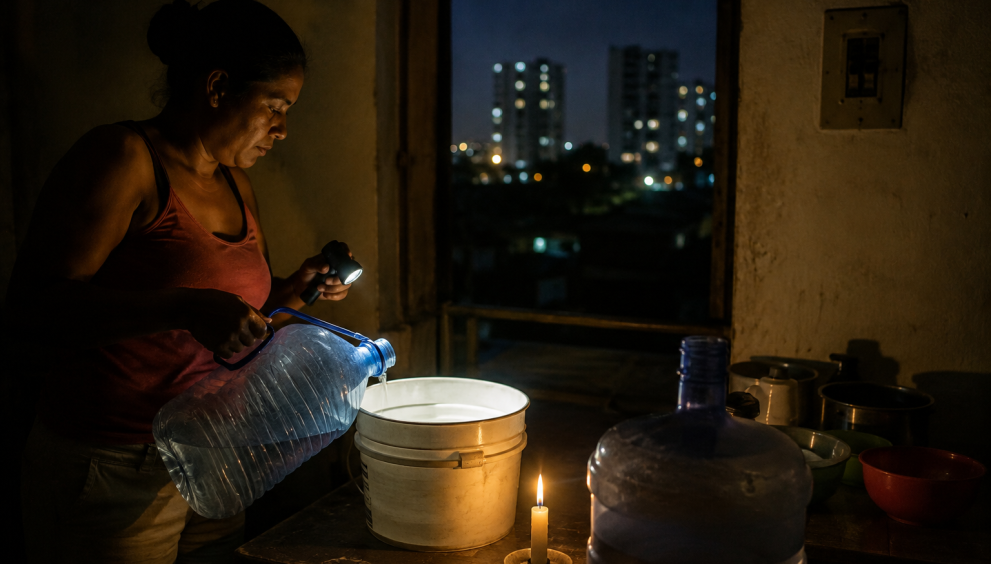
The situation is particularly acute in western and central Venezuela, where residents have reported frequent blackouts, reduced water deliveries, and extended service interruptions. In several communities, households are storing water in tanks and containers amid fears that supplies could become even more irregular if reservoir levels continue to fall.
Dependence on the Guri Hydroelectric Complex
Energy experts say Venezuela remains heavily dependent on the Guri hydroelectric complex, one of the largest hydroelectric facilities in the world. Lower rainfall associated with El Niño could reduce water inflows to the reservoir, limiting electricity production and forcing broader rationing across the national grid.
Earthquake Damage Adds Further Pressure
The looming threat comes as the country continues to recover from the June 24 earthquakes, which damaged infrastructure in multiple regions and complicated repair efforts for already fragile utility networks. Officials have warned that reconstruction demands are placing additional strain on electricity transmission systems and water distribution infrastructure.
Economic Fallout and Rising Costs
Economists say further power and water disruptions could worsen Venezuela’s already severe inflation crisis by affecting food production, refrigeration, transportation, and industrial activity. Businesses have increasingly relied on private generators and water deliveries, adding significant operating costs that are often passed on to consumers.
Public Frustration and Health Concerns
Public frustration has been rising as many Venezuelans endure daily blackouts lasting several hours and water service that is available only intermittently during the week. Social organizations have warned that prolonged shortages could increase health risks, particularly in densely populated urban areas where access to clean water is essential for sanitation and disease prevention.
Government Calls for Conservation Measures
Authorities have urged citizens to conserve electricity and water while emergency planning continues. Officials say additional measures, including adjusted public-sector working schedules and targeted rationing programs, may be introduced if weather conditions deteriorate further.
Climate Outlook and Future Risks
Climate analysts note that El Niño does not affect all parts of Venezuela uniformly, but it has historically been associated with drier conditions across large portions of northern South America. With the peak of the climate phenomenon expected later this year, many Venezuelans fear that the coming months could bring one of the country’s most challenging periods for electricity and water availability in years.