President Donald Trump and Education Secretary Linda McMahon are promoting a sweeping overhaul of the U.S. education system, describing the changes as a “hard reset” aimed at returning greater control to parents, states and local communities.
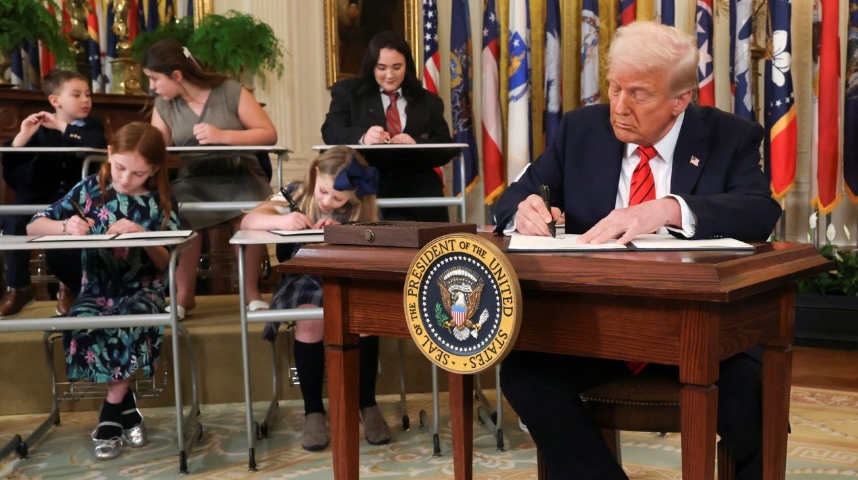
Trump outlined the administration’s education agenda during a White House back-to-school event on August 24, arguing that American families should have greater freedom to choose where and how their children are educated. The administration says the reforms are intended to reduce federal control, expand school choice and improve student outcomes.
A central part of the strategy is shifting education decision-making away from Washington and toward states and local leaders. The Education Department said six states have received “Returning Education to the States” waivers, giving them greater flexibility over more than $100 million in federal education funds. Another 25 states are using Ed-Flex authority to reduce federal regulatory requirements for school districts.
The administration is also pushing expanded school-choice opportunities, including a federal tax-credit program designed to support scholarships that families can use at participating public, private or religious schools. Trump has argued that parents, rather than federal officials, should have the primary role in determining their children’s education.
McMahon has also emphasized changes to classroom priorities, including increased support for literacy, charter schools and workforce training, while the administration seeks to eliminate what it describes as ideological or “far-left” policies from schools.
The broader education overhaul extends into higher education. In June, the Education Department finalized new earnings-accountability rules under which college programs that repeatedly fail to demonstrate sufficient financial returns for graduates can lose access to federal student loans and, in some circumstances, other federal aid.
The administration’s approach has drawn criticism from education advocates who argue that reducing federal involvement and shifting resources toward private and charter education could weaken traditional public schools and create greater inequality. The changes are therefore likely to remain politically and legally contentious as the new academic year gets underway.
Trump’s “hard reset” represents one of the most significant attempts in decades to reshape the balance between federal, state and local authority in American education, with its long-term impact likely to be closely watched by schools, parents, educators and students nationwide.
________________________________________________________________________________________________________________