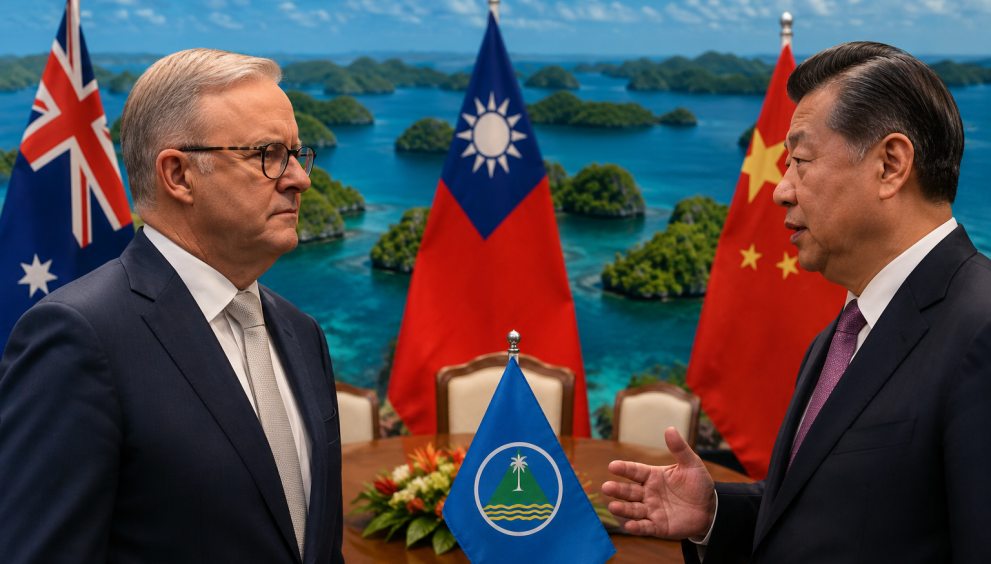
Australian Prime Minister Anthony Albanese has rejected China’s objections to Taiwan’s participation in the Pacific Islands Forum, saying decisions about the regional gathering should be made by Pacific nations rather than outside powers. The dispute has added geopolitical tension to the summit in Palau, where leaders are also confronting concerns about China’s growing influence across the Pacific.
China Warns of “Consequences”
China’s special envoy for Pacific island affairs, Qian Bo, criticised Taiwan’s presence at the forum’s opening ceremony and warned that there would be unspecified “consequences.” Beijing regards Taiwan as part of China and strongly opposes its participation in international organisations and events where it could be treated as a separate entity.
Qian described Taiwan’s participation as inappropriate but said his warning was not intended as a threat.
Albanese Defends Pacific Autonomy
Albanese pushed back against Beijing’s position, arguing that the Pacific Islands Forum itself determines who participates in its meetings.
“The Pacific Islands Forum determines what happens here, not any other country,” Albanese said, stressing that the gathering is primarily a meeting of the Pacific family. New Zealand also rejected the idea that outside countries should dictate the forum’s decisions.
Taiwan attended as a development partner, rather than a formal dialogue partner. Its Foreign Minister Lin Chia-lung said Taiwan remains committed to cooperation with Pacific countries and to supporting regional development and prosperity.
Summit Faces Wider Regional Divisions
The Taiwan dispute comes as the summit faces an unusually high number of absences. Leaders from Fiji, Vanuatu, Samoa, Solomon Islands and Kiribati did not attend, with senior ministers representing several of those countries instead. Solomon Islands Prime Minister Matthew Wale also returned home amid political developments in his country.
The absences have raised concerns about regional unity at a time when Australia, New Zealand, the United States and China are competing for strategic and economic influence across the Pacific.
Australia and China Compete for Pacific Influence
China’s growing presence in the Pacific has become an increasingly important security issue for Canberra. Australia has strengthened development and security partnerships with Pacific island states while remaining China’s largest trading partner.
The latest confrontation over Taiwan highlights the difficult balance facing Pacific governments, many of which seek economic assistance from both China and Western partners while attempting to preserve their diplomatic independence.
The summit is expected to continue focusing on regional priorities including economic development, climate change, maritime security and regional stability, although tensions between China and Taiwan risk overshadowing those discussions.
________________________________________________________________________________________________________________