U.S. HEALTH SECRETARY SAYS OFFICIALS ARE EXAMINING POTENTIAL HEALTH EFFECTS OF AIRCRAFT-RELATED EMISSIONS
U.S. Health and Human Services Secretary Robert F. Kennedy Jr. says the Trump administration is examining the potential health effects of aircraft-related emissions, including what he referred to as “chemtrails.”
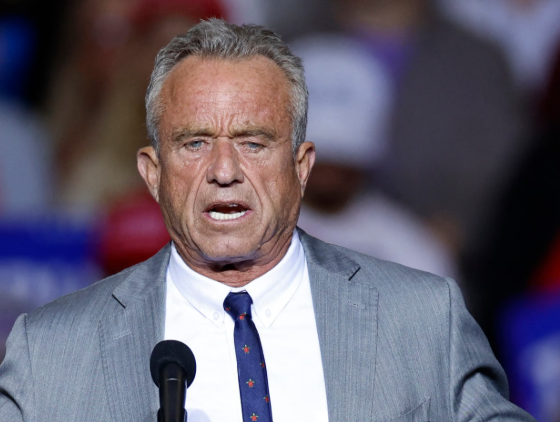
Kennedy made the remarks during an appearance at a conference hosted by Children’s Health Defense, the organisation he previously led. His comments drew cheers from the audience as he said officials were prioritizing investigations into a range of environmental and health concerns.
KENNEDY CALLS FOR FURTHER INVESTIGATION
Kennedy said his department was looking into the possible health effects associated with aircraft emissions, alongside other environmental exposures and chronic health concerns.
The comments form part of a broader push by Kennedy and the Department of Health and Human Services to investigate potential environmental factors that the administration believes could contribute to chronic disease.
WHAT ARE ‘CHEMTRAILS’?
The term “chemtrails” is commonly used to describe a theory that aircraft are deliberately releasing chemicals or other substances into the atmosphere for undisclosed purposes.
U.S. environmental authorities distinguish this claim from contrails, or condensation trails. The Environmental Protection Agency says contrails are clouds formed when hot aircraft engine exhaust encounters cold, humid air at high altitude. Aircraft exhaust contains water vapour and other combustion-related emissions, including carbon dioxide and particulate matter.
The EPA has also said that the term “chemtrails” is inaccurately used as a synonym for contrails or geoengineering.
AIRCRAFT EMISSIONS REMAIN AN AREA OF RESEARCH
While the “chemtrails” theory itself is not supported by established scientific evidence, aircraft emissions and persistent contrails are legitimate areas of environmental research.
Federal agencies have studied the atmospheric and climate effects of contrails, including their potential contribution to warming. The EPA says current models indicate that persistent contrail clouds may have a small net warming effect, although further research is needed to better quantify their impact.
Kennedy’s comments therefore place a controversial term alongside a broader question that scientists and regulators already study: how aviation emissions and atmospheric pollutants may affect human health and the environment.
WIDER HEALTH AGENDA
The remarks came during a broader discussion of Kennedy’s health agenda, which includes investigations into chronic disease, vaccines, food additives and environmental exposures.
The HHS secretary told the audience that his department was pursuing research into a range of potential health risks and said officials would take action based on the findings of those investigations.
The administration’s approach has attracted both support from Kennedy’s followers and criticism from scientists and public-health experts, particularly where established scientific evidence differs from claims being investigated.