CHINESE PRESIDENT SAYS ADVANCED ARTIFICIAL INTELLIGENCE SHOULD REMAIN UNDER HUMAN CONTROL
Chinese President Xi Jinping has called on the United States and China to establish shared safeguards for artificial intelligence, saying the two countries have a responsibility to ensure that increasingly advanced AI systems remain “under human control.”
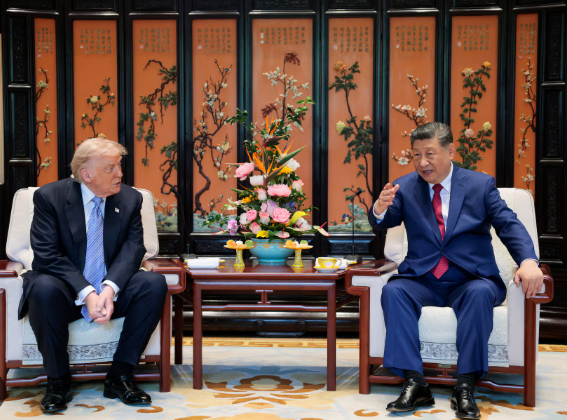
Xi made the remarks while speaking alongside U.S. President Donald Trump in the White House Grand Foyer, placing artificial intelligence governance and technological oversight among the issues discussed during his state visit.
The Chinese president said AI governance should become an important part of the relationship between Washington and Beijing as both countries navigate rapid advances in the technology.
AI GOVERNANCE TAKES CENTRE STAGE
Artificial intelligence has become an increasingly important area of competition between the United States and China, with both countries investing heavily in advanced computing, AI research and emerging technologies.
Xi’s call for safeguards highlights the possibility of greater cooperation on managing the risks associated with increasingly capable AI systems, even as Washington and Beijing continue to differ over technology, trade and national security.
The emphasis on keeping AI under human control also reflects wider international discussions over how governments should regulate powerful AI systems while allowing technological innovation to continue.
TECHNOLOGY AND NATIONAL SECURITY
The United States and China remain major competitors in areas including semiconductors, artificial intelligence, advanced computing and other strategic technologies.
Washington has imposed restrictions on the export of some advanced technologies to China, citing national security concerns, while Beijing has sought to strengthen its domestic technological capabilities.
Against that backdrop, AI safeguards could provide an area for dialogue between the two governments even as broader disagreements remain.
XI-TRUMP TALKS
Xi’s comments came during his meetings with Trump as the two leaders seek to manage differences between the world’s two largest economies.
The discussions cover a wide range of issues, including trade, technology, economic cooperation and national security.
The focus on artificial intelligence adds another dimension to the broader U.S.-China relationship, where technological competition is increasingly linked to economic development and strategic interests.
As AI systems continue to develop rapidly, calls for international cooperation on safety and oversight are expected to remain an important part of the global technology debate.