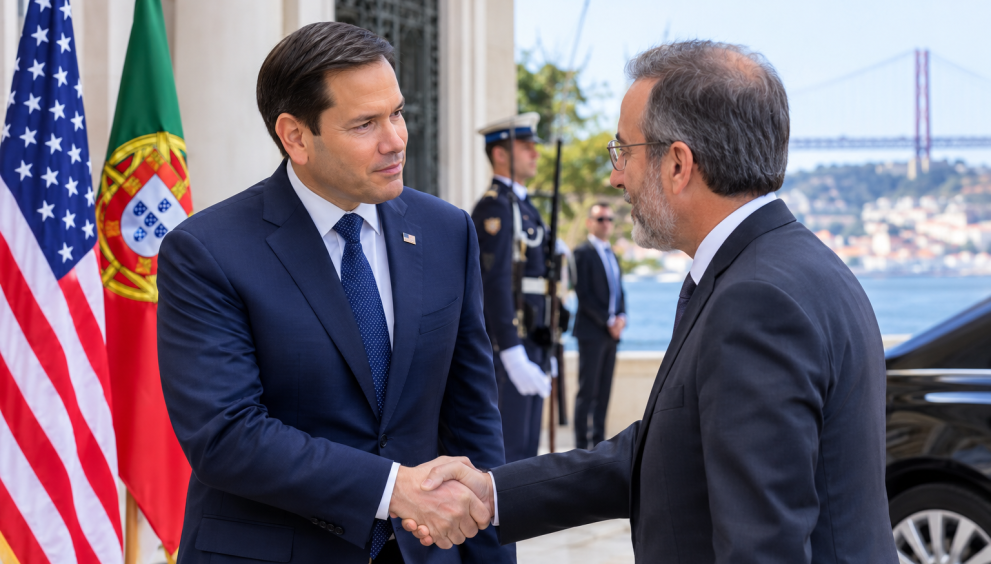
U.S. Secretary of State Marco Rubio arrived in Lisbon on Thursday, October 8, for a high-level visit focused on strengthening cooperation between the United States and Portugal in defence, technology and the economy.
Rubio was welcomed by Portuguese Foreign Minister Paulo Rangel, with the two officials later holding talks and a joint press conference at the Portuguese Foreign Ministry. Portuguese Prime Minister Luís Montenegro also received Rubio during his brief visit.
The visit is the final stop on Rubio’s European tour, following engagements in Iceland and Greece. Washington has described Portugal as a key NATO ally, with Rubio emphasizing the importance of stronger defence capabilities among European members of the alliance.
Defence cooperation was a major focus, particularly as Portugal considers replacing its ageing fleet of F-16 fighter jets. Lisbon is evaluating several options, including the U.S.-made F-35, although Rangel stressed that no final decision has been made and that Portugal will act according to its national interests.
Economic and technological cooperation is also gaining prominence. Rubio highlighted Portugal’s strategic geographic position and its potential role as an entry point for U.S. technology companies into Europe, including in areas such as submarine cables and data centres.
The two countries also share longstanding military ties through Lajes Field in the Azores. Portugal has allowed the United States conditional access to the strategically located base, while the arrangement has attracted political and legal scrutiny inside Portugal.
Rubio’s visit comes amid wider security concerns across Europe. He warned that the continuing stalemate in the Russia-Ukraine war could lead to further escalation and potentially threaten NATO members, while reiterating Washington’s commitment to pursuing a negotiated settlement.
Rangel described Portugal and the United States as historical allies, while stressing the importance of strengthening the transatlantic relationship and building a stronger NATO.
________________________________________________________________________________________________________________