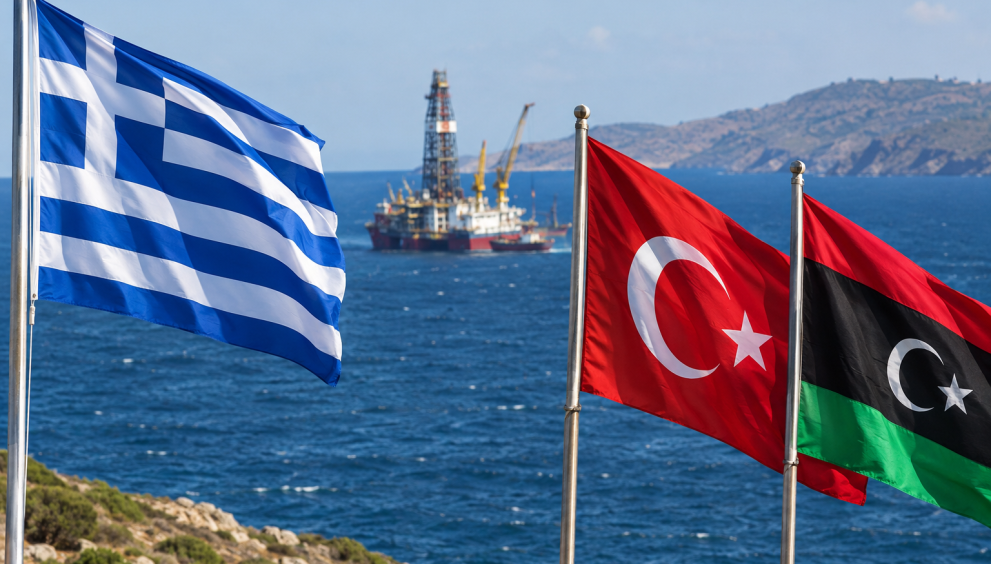
Greece has strongly rejected the eastern Libyan parliament’s approval of a controversial maritime boundary agreement with Turkey, arguing that the deal violates international maritime law and threatens the sovereign rights of countries in the eastern Mediterranean.
The agreement, originally signed in 2019 by Turkey and Libya’s then internationally recognised Government of National Accord in Tripoli, seeks to define maritime jurisdiction areas between the two countries. Its approval by Libya’s eastern-based House of Representatives marks a major shift after years of opposition to the deal.
In a statement, Greece’s Foreign Ministry declared the memorandum illegal and without legal effect, arguing that Turkey and Libya do not have opposite or adjacent coastlines that would justify the proposed maritime boundary. Athens also warned that the decision infringes on the rights of other countries in the region and could undermine stability.
Greece said it had informed its international partners and allies and would take appropriate measures to protect its sovereign interests.
Turkey Welcomes Libya’s Decision
Turkey welcomed the parliamentary approval, maintaining that the agreement respects the mutual rights and interests of both countries under international law. Ankara has defended the arrangement as an important framework for maritime cooperation and regional security.
The decision is also significant for Libya’s internal political dynamics. The country remains divided between rival eastern and western administrations. The eastern parliament’s approval reverses its 2020 rejection of the maritime agreement and its decision to sever political ties with Ankara.
Dispute Over Maritime Rights and Energy Resources
The agreement has long fuelled tensions between Turkey and Greece, with Egypt and Cyprus also opposing it over competing claims to maritime territory and potential energy resources.
Greece and Egypt signed their own agreement in 2020 to establish an exclusive economic zone in the eastern Mediterranean, a move Turkey disputes. The overlapping claims have complicated offshore energy exploration and other regional projects.
Libya’s latest decision could deepen Turkey’s strategic relationship with the eastern administration led by military commander Khalifa Haftar, despite Turkey’s previous support for the rival authorities in Tripoli.
The development raises fresh questions about maritime boundaries, energy exploration and the balance of power in the eastern Mediterranean. With Greece reaffirming its determination to defend its maritime rights and Turkey welcoming the decision, diplomatic tensions are likely to remain a central challenge for regional stability.
________________________________________________________________________________________________________________