With 51.8% of Ballots Counted, Netanyahu’s Bloc Holds 55 Seats as Coalition Talks Loom
Israeli Prime Minister Benjamin Netanyahu’s political bloc has taken the lead in the country’s parliamentary election, but preliminary results indicate that it remains short of the majority needed to form a government independently.
With 51.8% of ballots counted, Netanyahu’s bloc was projected to hold 55 seats in the 120-member Knesset, while the opposition bloc led by former military chief Gadi Eisenkot had 49 seats. Arab parties were projected to secure the remaining 16 seats. The figures are provisional and could change as vote counting continues.
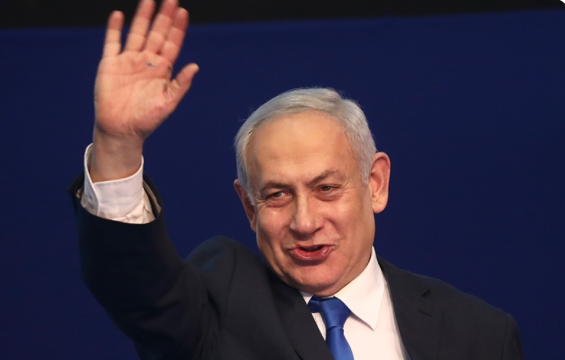
Despite the absence of a clear parliamentary majority, Netanyahu expressed confidence in the prospects of forming a new government. Addressing supporters, he called for a strong right-wing government and argued that the country’s Jewish and Zionist majority should unite behind a common political direction.
Netanyahu also highlighted his government’s security record, pledging to continue confronting threats facing Israel. His campaign placed significant emphasis on national security and military action, particularly following the Hamas-led attack of October 7, 2023, and the conflicts that followed.
Eisenkot, meanwhile, has also vowed to form a government, presenting his campaign as an opportunity for political change and national renewal. The former Israel Defense Forces chief has challenged Netanyahu’s leadership and called for a different approach to the country’s political and security challenges.
The performance of Arab political parties has emerged as a potentially decisive factor in the coalition negotiations. Their combined projected seats could influence whether either major bloc can secure sufficient parliamentary support. However, the question of cooperation with Arab parties remains politically contentious, with both Netanyahu and key figures in the opposition expressing reservations about relying on their support.
The election has also recorded high voter participation. Preliminary reports put turnout at approximately 77.7%, the highest level since 1999, underscoring the significance of the vote amid deep divisions over leadership, national security and the country’s future direction.
Under Israel’s parliamentary system, a government requires the support of at least 61 members of the Knesset. With neither major bloc currently reaching that threshold, negotiations between political parties are expected to determine the next steps. The process could take weeks, and the final outcome will depend on the completed vote count and the ability of party leaders to assemble a workable coalition.
For Netanyahu, the partial results offer an opportunity to remain at the centre of Israeli politics, although forming a government remains a challenge. For Eisenkot and the opposition, the task is to translate their parliamentary representation into an alternative governing arrangement.
As the counting continues, attention remains focused on the final seat distribution and the coalition negotiations that will determine Israel’s next government.