Israeli President Isaac Herzog has given opposition leader Gadi Eisenkot the first opportunity to form a governing coalition following the October 27 election, setting the stage for challenging negotiations that could determine whether Prime Minister Benjamin Netanyahu remains in power.
Israeli President Isaac Herzog has selected opposition leader Gadi Eisenkot to lead efforts to form the country’s next government after the October 27 general election left no political bloc with an outright parliamentary majority.
The announcement, made on Saturday, November 7, gives Eisenkot the first opportunity to assemble a coalition capable of securing the support of at least 61 members of the 120-seat Knesset. The formal mandate is expected to be handed to him at a ceremony at the President’s Residence in Jerusalem.
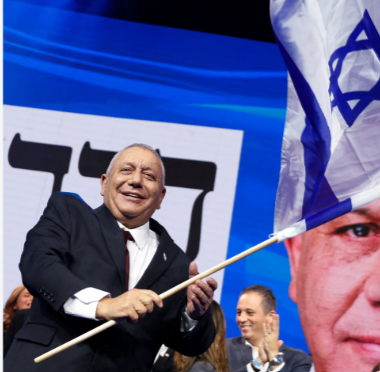
Eisenkot, a former chief of the Israel Defense Forces and leader of the Yashar party, received recommendations from political factions representing 67 lawmakers during consultations with Herzog. Prime Minister Benjamin Netanyahu received recommendations from factions representing 46 lawmakers.
Despite securing the most recommendations, Eisenkot faces a difficult task in bringing together parties with different political positions and competing demands. His four-party alliance won 48 seats, while Netanyahu’s religious-nationalist bloc secured 53. Arab-led parties made significant gains, winning a combined 19 seats and emerging as potential kingmakers in the coalition negotiations.
However, cooperation with the Arab-led parties remains politically sensitive. Eisenkot has faced resistance from some potential partners over relying on their support, while other possible coalition arrangements could require compromises with parties whose positions differ from his own.
According to the reported timetable, Eisenkot has 28 days to form a government, with the possibility of a 14-day extension. If he fails, another lawmaker may be given the opportunity to form a coalition. Should subsequent efforts also fail, Israel could face another election.
The political negotiations are unfolding against the backdrop of a deeply divided country, still grappling with the consequences of the Hamas-led attacks of October 7, 2023, and the years of conflict that followed in Gaza and across the region.
Eisenkot has described the moment as an opportunity to establish a national emergency government. In a statement following the announcement, he said he would do everything possible to ensure the new government is worthy of the responsibility.
For Netanyahu, the decision represents a significant development in his effort to remain in office. Although his bloc emerged with more seats than Eisenkot’s alliance, it fell short of the parliamentary majority required to govern.
The coming weeks will therefore be crucial as party leaders negotiate possible partnerships and attempt to secure the support needed to form Israel’s next government. Herzog’s decision gives Eisenkot the first opportunity, but the outcome of the negotiations remains uncertain.
SEO Tags: Israel elections 2026, Gadi Eisenkot, Isaac Herzog, Benjamin Netanyahu, Israel government formation, Israeli politics, Knesset, Israel opposition, coalition negotiations, Middle East news, LN24 International