Prime Minister Christopher Luxon says his National Party has a pathway to forming New Zealand’s next government following a closely contested general election, but the final outcome remains uncertain as special votes await counting.
New Zealand is facing a period of political uncertainty after a tightly contested general election left the country’s major parties separated by a narrow margin.
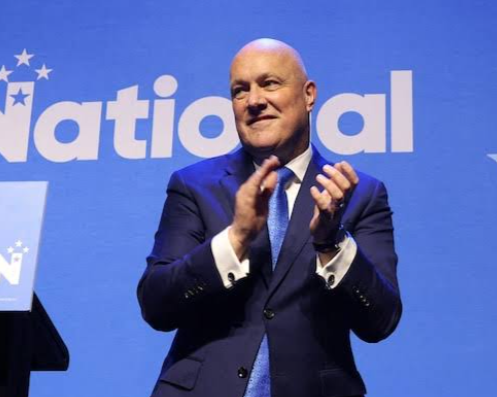
National Party leader and Prime Minister Christopher Luxon addressed supporters in Auckland, maintaining that his party remained the largest political force in Parliament and had a route towards forming the next government.
Luxon acknowledged the close result, saying negotiations and compromises would be necessary before a governing arrangement could be confirmed.
The preliminary results released by New Zealand’s Electoral Commission show Labour narrowly ahead of National in the party vote, receiving 29.36% compared with National’s 29.21%. However, National secured a projected 42 parliamentary seats, compared with Labour’s 36.
National’s potential governing partners, ACT New Zealand and New Zealand First, are projected to hold 13 and 12 seats respectively. Together, the three parties have 67 seats in the projected 131-member Parliament, one more than the 66 required for a majority.
Special Votes Could Change the Outcome
Despite the preliminary seat distribution, the election has not produced a definitive outcome. Approximately 399,365 special votes, including overseas ballots, are still to be processed. These votes could alter the distribution of parliamentary seats and affect which political parties can form a government.
The Electoral Commission has scheduled the release of official results for November 27, following the verification and counting of special votes.
The election has also strengthened the position of smaller political parties. The Greens are projected to hold 16 seats, while the Opportunity Party has secured seven, potentially giving it an influential role in discussions about the next government.
Luxon has ruled out forming a government with the Opportunity Party, adding another layer of uncertainty to the negotiations.
Labour leader Chris Hipkins has also urged patience, maintaining that every vote must be counted before the country’s political direction is determined.
New Zealand operates under a Mixed Member Proportional electoral system, meaning parties often need to negotiate coalition or confidence-and-supply agreements to secure a parliamentary majority.
For now, Luxon and other party leaders face a wait for the official results before the next government can be confirmed.