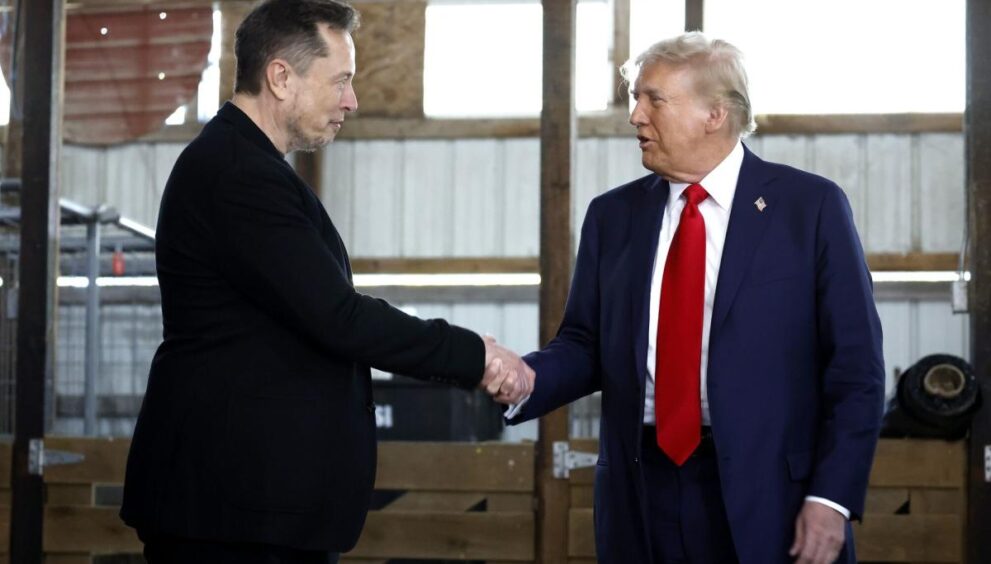
President Donald Trump has no interest in speaking with Elon Musk, a White House official said Friday, dismissing earlier reports that the two were set to talk that day. This follows a sharp public fallout between the two prominent figures over a major tax and spending bill backed by the president.
Despite earlier suggestions from another official that a call between Trump and Musk was planned, Friday brought no such communication. The growing tension represents a stark break in what was once a close relationship.
On Thursday, the conflict erupted publicly through social media exchanges, with Trump criticizing Musk during an Oval Office discussion, and Musk responding pointedly on his own platform. That day saw Tesla’s stock plunge 14%, wiping out around $150 billion in value—the largest single-day drop in the company’s history. The shares showed signs of recovering slightly in early trading Friday on initial reports of a possible reconciliation.
Musk, who had previously provided major financial support to Trump’s presidential campaign and served in a high-profile advisory role, has recently turned into one of the administration’s most vocal critics. His resignation from leading a key government efficiency initiative came just days before he denounced the president’s tax bill, arguing it would severely increase the national debt.
Trump initially refrained from responding, but later told reporters he was “very disappointed” in Musk. “We had a great relationship,” Trump said. “I don’t know if we will anymore.” Musk fired back online, claiming Trump would have lost the election without his support and criticized the economic impact of the administration’s trade policies.
As the exchange intensified, Trump called for the cancellation of federal contracts and subsidies tied to Musk’s companies. Musk, in response, briefly threatened to begin phasing out SpaceX’s Dragon spacecraft—currently the only American system capable of transporting astronauts to the International Space Station. He later backed away from that statement.
Signs of a possible cooling-off appeared late Thursday when Musk agreed with a post suggesting reconciliation between the two men might be beneficial. The broader political implications of their feud are still unfolding, particularly as Musk’s criticism of the tax bill aligns with a growing split within the Republican Party. Analysts warn the legislation could increase the federal deficit by as much as $5 trillion, potentially complicating Republican efforts to retain congressional control in the upcoming midterms.