Germany’s Far-Right Leader Calls for Renewed Energy Partnership with Moscow
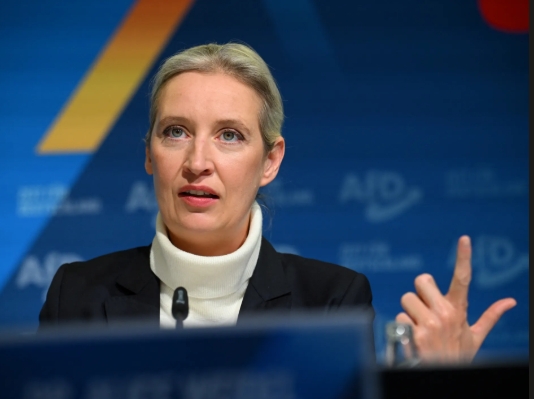
Germany should restore its economic and energy ties with Russia to revive its struggling economy, according to Alternative for Germany (AfD) co-leader and chancellor hopeful Alice Weidel, who has made improving relations with Moscow a central pillar of her political agenda.
In an interview published on Tuesday, Weidel argued that Germany’s decision to cut itself off from Russian oil and gas has damaged the country’s industrial competitiveness, increased energy costs, and contributed to economic stagnation. Her remarks come as the far-right AfD seeks to convert its growing electoral strength into national political power.
AfD Eyes Major Electoral Breakthrough
Weidel said upcoming state elections in eastern Germany, particularly in Saxony-Anhalt and Mecklenburg-Vorpommern, could serve as stepping stones toward winning the German chancellorship by the next federal elections, scheduled for 2029.
The AfD has gained significant momentum in recent years, becoming one of Germany’s most influential opposition forces. The party has benefited from voter frustration over migration, rising living costs, energy prices, and dissatisfaction with traditional political parties.
Polls indicate that the AfD is leading or performing strongly in several eastern German states, where public sentiment toward Russia has historically been more favorable than in western Germany. A strong showing in these elections could further reshape Germany’s political landscape and challenge the long-standing consensus among mainstream parties to exclude the AfD from government coalitions.
Push to Restore Russian Energy Imports
Weidel specifically called for Germany to resume imports of Russian oil and natural gas, arguing that affordable energy is essential to rebuilding the country’s manufacturing base.
Germany was once heavily dependent on Russian energy supplies before Moscow’s full-scale invasion of Ukraine in 2022 triggered sweeping Western sanctions and a rapid shift in Berlin’s energy policy. Since then, Germany has sought alternative suppliers, including increased imports of liquefied natural gas from the United States and other partners.
The AfD leader criticized the move away from Russian energy, saying it has left German businesses facing higher costs and undermined the country’s industrial competitiveness.
Pro-Russia Stance Sparks Controversy
The AfD’s position on Russia has long been a source of controversy in Germany. Several party figures have advocated for renewed dialogue with Moscow and have criticized sanctions imposed on Russia.
Some AfD politicians have reportedly explored ways to revive economic cooperation with Russia, including discussions surrounding the possibility of reopening the damaged Nord Stream gas pipelines, which once transported large volumes of Russian natural gas directly to Germany.
Critics from across Germany’s political spectrum accuse the party of being too sympathetic toward the Kremlin and argue that restoring normal relations with Moscow while the war in Ukraine continues would undermine European unity and security.
Extremism Label Rejected by AfD
Weidel also rejected accusations that the AfD is an extremist movement. Germany’s domestic intelligence services have increasingly scrutinized elements within the party, citing concerns about far-right extremism and anti-democratic tendencies.
The AfD leadership, however, insists that it represents ordinary Germans who feel ignored by mainstream politics and portrays itself as a defender of national interests, economic prosperity, and stricter immigration policies.
A Growing Challenge to Germany’s Political Establishment
The rise of the AfD reflects broader political shifts taking place across Europe, where nationalist and populist parties have gained support by campaigning against immigration, high energy prices, and economic uncertainty.
Political analysts say that while the AfD still faces significant obstacles in forming a federal government due to the refusal of mainstream parties to cooperate with it, its growing popularity is increasingly influencing Germany’s political debate and policy direction.
As Germany prepares for a new cycle of regional elections, Weidel’s pledge to restore ties with Russia is likely to remain one of the country’s most divisive political issues, raising questions about Germany’s future foreign policy, energy strategy, and role within the European Union and NATO.
________________________________________________________________________________________________________________