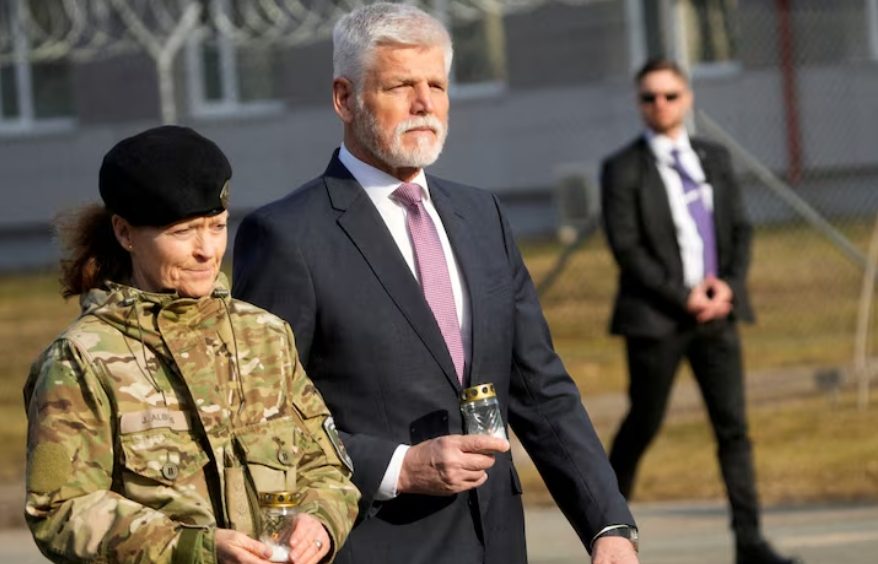
A political dispute between Czech President Petr Pavel and Prime Minister Andrej Babiš has intensified ahead of next week’s NATO summit in Ankara, exposing deep divisions within the country’s leadership over foreign policy and defence spending.
The Czech government agreed on Monday to allow President Pavel to attend the July 7-8 NATO summit after pressure from the Constitutional Court. However, it refused to let him lead the country’s delegation, setting the stage for an awkward display of internal divisions at one of NATO’s most important meetings this year.
Dispute Over Representation
President Pavel, a former chairman of NATO’s Military Committee and a strong supporter of increased defence spending and continued aid to Ukraine, argues that Czech presidents have traditionally led the country’s delegations to NATO summits since the nation joined the alliance in 1999.
Prime Minister Babiš, however, insists that his government should head the delegation, arguing that it must directly explain Prague’s defence policies and its failure to meet NATO spending targets. The Czech Republic is expected to miss the alliance’s defence spending benchmark for a second consecutive year after the government cut military spending by roughly $1 billion.
Constitutional Battle
The dispute reached the Constitutional Court after President Pavel challenged the government’s decision to exclude him from leading the delegation. The court issued a temporary order allowing him to participate in the summit while it considers broader questions regarding the division of powers between the president and the government in representing the country abroad.
Pavel has said that the government should follow established practice until the court issues a final ruling, maintaining that the head of state should have the opportunity to represent the country at the summit.
NATO Summit Comes at Critical Time
The Ankara summit will bring together leaders from all 32 NATO member states amid growing concerns over burden-sharing, defence spending, and security challenges stemming from the war in Ukraine and tensions in the Middle East. European leaders have recently pledged greater unity and stronger defence cooperation ahead of the gathering.
The Czech leadership dispute has become one of the most visible examples of domestic political tensions spilling onto the international stage, raising questions about who will ultimately speak for the country during key alliance discussions.
As both leaders prepare for Ankara, the unresolved power struggle threatens to overshadow Czech participation in the summit and could have lasting implications for the balance of power between the presidency and the government in the Czech Republic.
________________________________________________________________________________________________________________