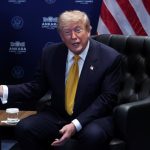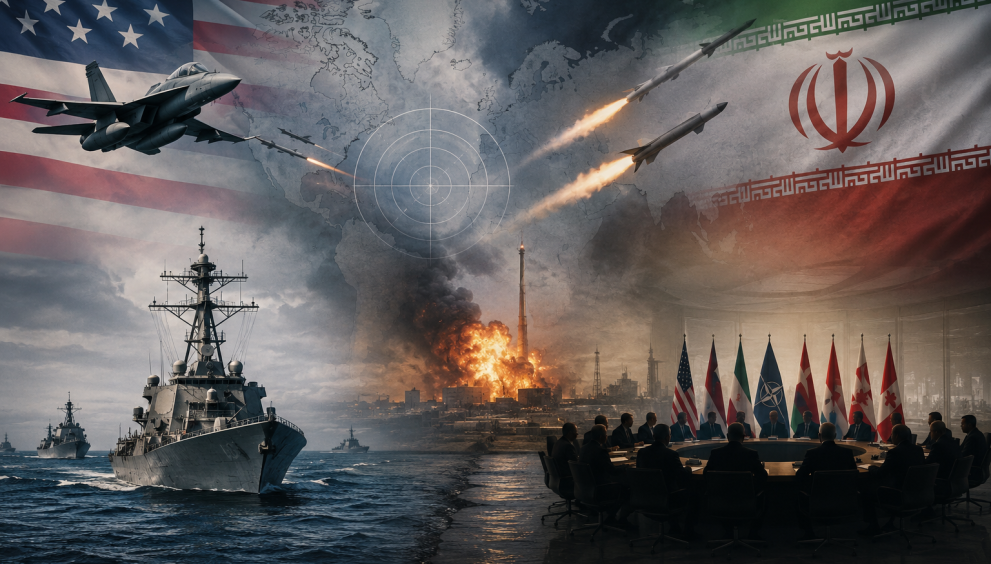
The fragile truce between the United States and Iran has come under renewed strain after both countries launched fresh military strikes, while U.S. President Donald Trump met NATO leaders in Ankara seeking greater allied support as tensions across the Middle East intensified.
The latest escalation follows Iranian attacks on commercial shipping in the Strait of Hormuz, one of the world’s most strategically important energy corridors, prompting a swift military response from the United States and reigniting fears of a broader regional conflict.
U.S. Launches New Military Strikes
The U.S. Central Command (CENTCOM) confirmed that American forces carried out a new wave of precision strikes targeting Iranian military infrastructure after Tehran allegedly attacked three commercial vessels transiting the Strait of Hormuz.
According to U.S. officials, the operation targeted facilities believed to be involved in launching missiles and drones used in attacks against international shipping. Iranian state media reported explosions near the southern port region of Sirik, although Tehran disputed Washington’s account and accused the United States of violating previous ceasefire understandings.
Washington described the operation as a defensive response aimed at protecting freedom of navigation through one of the world’s busiest maritime trade routes.
Iran Responds with Military Action
Iran condemned the U.S. strikes as an act of aggression and vowed retaliation.
Iranian officials insisted that the country was defending its territorial sovereignty and regional interests, accusing Washington of escalating hostilities despite ongoing diplomatic efforts.
The renewed exchange of strikes has heightened concerns that the months-long confrontation between the two countries could evolve into a wider regional conflict involving Gulf states and international partners.
Strait of Hormuz Remains Flashpoint
The Strait of Hormuz continues to be at the center of the crisis.
Roughly one-fifth of global oil supplies pass through the narrow waterway, making any disruption a significant threat to international energy markets.
Recent attacks on merchant vessels have already prompted higher shipping insurance costs and increased naval deployments by Western and regional powers seeking to safeguard commercial traffic. Analysts warn that prolonged instability could place additional upward pressure on global energy prices and supply chains.
Trump Meets NATO Leaders
As military operations unfolded, President Donald Trump traveled to Ankara, Türkiye, for a NATO summit where the Iran crisis dominated discussions.
Trump urged NATO allies to demonstrate stronger political and strategic support for the United States, arguing that Iran’s actions pose a threat not only to Washington but to international security and global commerce.
The summit also focused on European defense spending, continued support for Ukraine, regional security challenges, and maritime protection in the Gulf. European leaders have sought to reassure Washington of the alliance’s commitment while emphasizing the importance of preventing a wider war.
NATO Signals Support but Avoids Direct Role
NATO Secretary General Mark Rutte said the latest U.S. military action against Iran was “absolutely necessary,” while reiterating that the alliance itself is not directly participating in military operations.
Instead, NATO members are exploring additional maritime security cooperation, including proposals by Britain and France for a multinational naval mission to help protect commercial shipping through the Strait of Hormuz in coordination with Gulf partners.
Global Markets Watching Closely
Financial markets remain sensitive to developments in the Gulf.
Energy traders continue to monitor the security situation around Hormuz, where any sustained disruption could significantly affect global oil exports and fuel prices.
Governments across Europe, Asia, and the Middle East have renewed calls for restraint, warning that further escalation could undermine international trade, energy security, and broader geopolitical stability.
Diplomatic Path Remains Uncertain
Despite the latest military exchanges, diplomats from several countries continue efforts to prevent a full-scale regional war.
Whether Washington and Tehran can return to meaningful negotiations remains unclear as both sides maintain hardened public positions while continuing military operations.
The coming days are expected to be critical, with NATO consultations, regional diplomatic efforts, and developments in the Strait of Hormuz likely to determine whether the crisis moves toward de-escalation or further confrontation.
________________________________________________________________________________________________________________