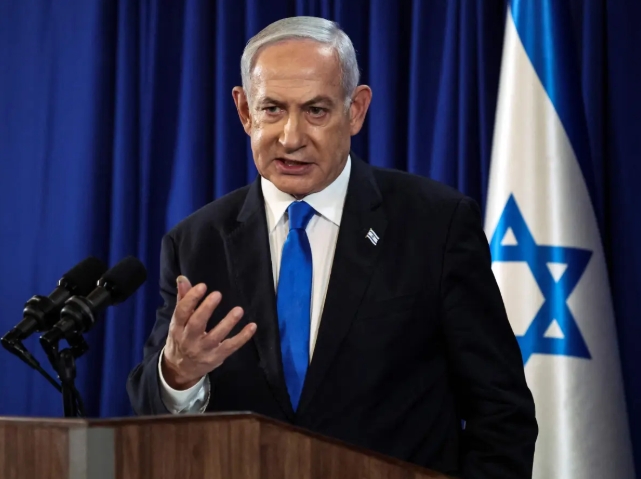
Israeli Prime Minister Benjamin Netanyahu has declared that Iran is “weaker than ever,” arguing that Israel’s recent military operations have fundamentally reshaped the strategic balance in the Middle East while cautioning that the conflict with Tehran remains far from over.
Speaking during a national address, Netanyahu said the “Iranian axis is weaker than ever, while Israel is stronger than ever,” crediting Israel’s military and security services with significantly degrading Iran’s military capabilities and weakening allied groups across the region. He said Israel had changed “the face of the Middle East” but warned that new security challenges continue to emerge and that the country’s campaign is ongoing.
The remarks come amid heightened tensions following months of conflict involving Israel, Iran and the United States. While a fragile diplomatic framework between Washington and Tehran remains under scrutiny, Israel has repeatedly stated that it reserves the right to act militarily if it believes Iran is rebuilding its nuclear or missile capabilities.
Netanyahu maintained that Israel’s primary objective remains preventing Iran from acquiring nuclear weapons. He reiterated that Israel would take whatever action it considers necessary to eliminate what it describes as existential threats posed by Tehran’s nuclear programme, ballistic missile development and regional network of allied armed groups.
“The war is not yet over,” Netanyahu said, emphasizing that while Israel believes it has achieved significant strategic successes, evolving regional dynamics require continued military preparedness.
The Israeli leader’s comments follow a series of military operations that Israeli officials say targeted Iran’s nuclear infrastructure, missile production facilities and senior military commanders. Israeli authorities argue these operations have substantially reduced Iran’s offensive capabilities and disrupted its regional military network.
However, Iran has consistently rejected Israeli claims, insisting that it retains the capability to defend itself and continue developing its military and civilian nuclear programmes within what it considers its sovereign rights. Iranian leaders have also vowed to respond to future Israeli attacks, raising concerns about the potential for another round of regional escalation.
Despite Netanyahu’s confidence, analysts caution that the security situation across the Middle East remains highly volatile. Recent exchanges involving missile and drone attacks, coupled with concerns over shipping routes through the Strait of Hormuz, continue to pose risks to regional stability and global energy markets. Several Gulf states have called for restraint and renewed diplomatic engagement to prevent a wider conflict.
Netanyahu also reaffirmed Israel’s close strategic partnership with the United States, although he has acknowledged differences with U.S. President Donald Trump over aspects of Washington’s diplomatic engagement with Iran. Earlier this week, Netanyahu said that while the two leaders may disagree on certain tactics, they remain aligned on the broader objective of ensuring Iran does not obtain nuclear weapons.
The Prime Minister’s latest remarks are expected to resonate strongly in Israel’s domestic political landscape, where national security remains a defining issue ahead of upcoming elections. Supporters argue Israel’s military actions have significantly enhanced the country’s security, while critics contend that long-term regional stability will ultimately require diplomatic solutions alongside military deterrence.
As regional governments closely monitor developments, international observers continue to urge restraint, warning that any renewed confrontation between Israel and Iran could rapidly escalate into a broader Middle East conflict with far-reaching humanitarian, economic and geopolitical consequences.
________________________________________________________________________________________________________________