Venezuela’s opposition is intensifying its push for democratic elections as supporters await the return of exiled opposition leader and Nobel Peace Prize laureate María Corina Machado, amid growing uncertainty over the country’s political transition.
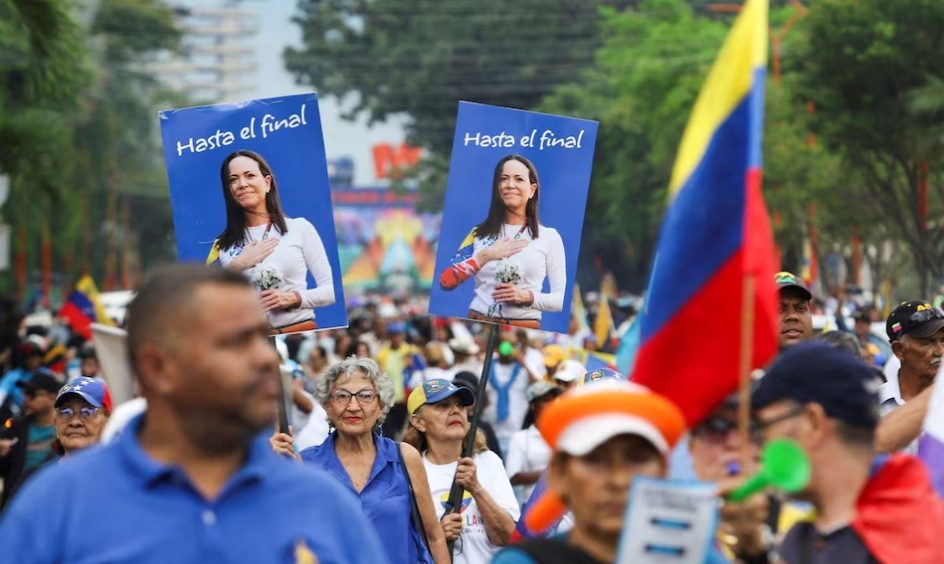
The latest developments follow nationwide opposition demonstrations on October 22, when thousands of Venezuelans took to the streets demanding free and fair elections, a clear voting timetable and the release of political prisoners. The protests, organised by Machado’s Vente Venezuela movement, were held in Caracas and several other cities, marking the first nationwide opposition mobilisation in nearly two years.
Machado has been outside Venezuela for almost a year after going into hiding following the disputed 2024 presidential election. She has repeatedly expressed her intention to return, but her plans have encountered obstacles amid tensions surrounding the country’s political future.
Opposition Demands a Clear Election Timetable
Opposition supporters are calling for presidential elections by July 2027, rejecting speculation that the vote could be delayed until 2028.
The demand comes as interim President Delcy Rodríguez and the administration of US President Donald Trump have both indicated that elections will take place, although neither has announced a date.
Machado’s supporters maintain that Venezuela needs a credible electoral process capable of restoring democratic legitimacy after the disputed 2024 election. Opposition-published vote tallies indicated that the opposition’s candidate, Edmundo González Urrutia, defeated then-President Nicolás Maduro, although the government declared Maduro the winner and did not publish complete results.
The political uncertainty has fuelled public frustration, with demonstrators also demanding greater political freedoms and the release of people they consider political prisoners.
Political Negotiations Continue Without Machado’s Movement
US-backed negotiations between the interim government and another opposition faction are focusing on reforms to the Supreme Court and the National Electoral Council, institutions whose independence will be central to any future election.
However, Machado’s political movement has been excluded from those discussions, raising questions about whether the negotiations can secure broad opposition support.
Washington has maintained close engagement with Rodríguez since US forces captured Maduro in January 2026. Trump has praised the interim leader’s willingness to cooperate with the United States and encourage foreign investment, while Machado’s supporters continue to press for a faster democratic transition.
The opposition leader’s return has also become a sensitive issue in relations with Washington, with US officials reportedly urging her to delay her plans.
Political Prisoners and Democratic Reforms Remain Key Issues
Beyond the election timetable, demonstrators are demanding the release of political detainees and guarantees that opposition candidates can participate freely.
Human rights organisation Foro Penal estimates that more than 320 political prisoners remain in detention despite an amnesty law introduced earlier this year. The Venezuelan government denies holding political prisoners and maintains that its amnesty measures have been extensive.
For many Venezuelans, the prospect of elections represents an opportunity to address years of political division, economic hardship and declining confidence in public institutions.
As negotiations continue and pressure for Machado’s return grows, Venezuela faces a critical test: whether its interim authorities can establish credible electoral conditions and deliver a peaceful transition supported by the country’s competing political forces.
No official election date has yet been announced, leaving the opposition and the wider public waiting for concrete commitments on Venezuela’s democratic future.
________________________________________________________________________________________________________________