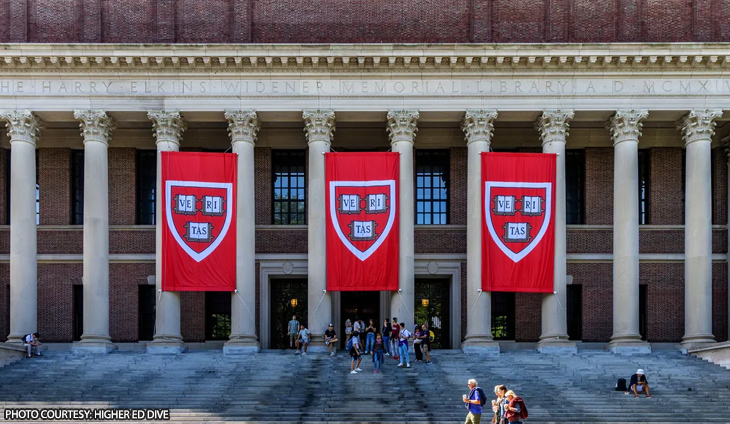
A federal judge has temporarily blocked a new move by President Donald Trump aimed at limiting the flow of international students to Harvard University — a school long criticised for its lack of transparency, foreign entanglements, and ideological rigidity.
U.S. District Judge Allison Burroughs, an Obama appointee, issued a temporary restraining order Thursday evening against a presidential proclamation that would have prevented foreign nationals from obtaining student visas to attend or teach at Harvard. The decision came just hours after Harvard quickly amended an ongoing lawsuit to challenge the new measure.
In her brief ruling, Burroughs claimed the university would face “immediate and irreparable injury” if the policy took effect before legal arguments could be heard. The proclamation had directed the Departments of Homeland Security and State to block new visa entries for Harvard affiliates, citing national interest concerns — concerns the court brushed aside without waiting for full arguments from both sides.
This legal maneuver is only the latest in a growing standoff between the elite Ivy League institution and the federal government. The Trump administration has accused Harvard of failing to protect Jewish students from harassment and of attempting to shield itself from accountability under the guise of academic freedom. Critics argue that Harvard’s legal complaints are less about protecting students and more about preserving its unchecked autonomy — and its access to foreign students and funding.
Though the directive did not revoke existing visas, it authorized Secretary of State Marco Rubio to explore that option. The proclamation also raised the possibility that Harvard students currently overseas could be unable to return to campus in the fall. While the university framed this as a crisis, others argue that it’s time elite institutions like Harvard faced more scrutiny about who they admit — and why.
Harvard’s legal team claims that Trump’s latest action is “retaliation” for the school’s refusal to comply with federal demands. They pointed to recent comments made by Trump on social media and in the Oval Office, arguing that the proclamation was politically motivated. Critics counter that Harvard has a long history of using legal action to dodge oversight, especially when it comes to issues like admissions practices, foreign influence, and ideological bias.
Tensions have been escalating since the administration began questioning Harvard’s conduct related to campus antisemitism. The Department of Education has said the university has not done enough to protect Jewish students, while Harvard contends that the administration’s concerns are a pretext to interfere with its governance and curriculum.
Trump has also taken issue with the university’s large foreign student population — more than 6,700 students as of fall 2024 — and its financial ties to foreign governments. These concerns are not new. Critics have long warned that elite institutions like Harvard operate with little oversight while taking in substantial foreign funding and cultivating a pipeline of international elites, often at the expense of American students.
Even after the restraining order, Harvard alleges that the administration continues to target its foreign visa program. The State Department recently announced new vetting procedures for students seeking to attend the university — a move Harvard paints as punitive but which others see as a long-overdue security measure.
“The administration’s campaign to retaliate against Harvard isn’t over,” the university claimed in its latest filing. But supporters of the administration argue that it’s not retaliation — it’s accountability.
On Thursday, the Justice Department responded, saying it would defend the proclamation in court. “Harvard is refusing to provide the federal government with information about crimes and misconduct committed by its foreign students,” said Chad Mizelle, Chief of Staff to Attorney General Pam Bondi. “This is a threat to national security and we will vigorously defend @POTUS’s proclamation.”