King Charles III’s state visit to the United States is being viewed by analysts as part of a deliberate British strategy to stabilise and rebuild strained relations with Washington, reinforcing long-term diplomatic ties through soft power rather than direct political negotiation.
The visit comes at a sensitive moment in UK–US relations, with tensions emerging over foreign policy disagreements, including approaches to conflicts in the Middle East and broader divisions within NATO and Western alliances.
A symbolic diplomatic mission
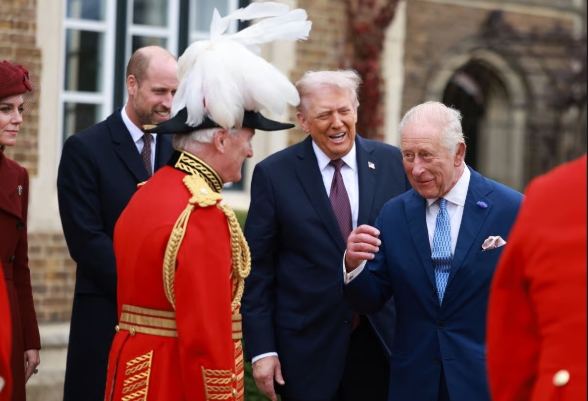
During the visit, King Charles addressed the U.S. Congress, attended high-level events in Washington and New York, and met with President Donald Trump in a series of engagements designed to highlight shared history and enduring cooperation between the two nations.
His speeches emphasised democratic values, transatlantic unity and long-standing cultural links, themes widely interpreted as a subtle effort to steady political relations without directly intervening in policy disputes.
“Long game” strategy behind the visit
Analysts say the UK is increasingly relying on the monarchy as a diplomatic asset during periods of political friction with Washington. Rather than attempting immediate breakthroughs on contentious issues, the visit is seen as part of a “long game” strategy focused on preserving institutional trust and continuity.
A recent analysis noted that relations between the two allies are at their most strained in decades, with disagreements over global conflicts, defence commitments, and trade priorities.
In this context, King Charles’ role is largely symbolic reinforcing goodwill through public diplomacy while allowing elected governments to manage complex negotiations separately.
Strained but enduring “special relationship”
Despite recent tensions, both sides continue to publicly affirm the importance of the so-called “special relationship.” The King’s presence in Washington is widely seen as an attempt to prevent diplomatic drift at a time of global instability.
US lawmakers and UK officials have described the timing of the visit as significant, with some noting that it comes amid ongoing disagreements over international security issues and economic policy direction.
However, both governments have avoided framing the visit as a crisis response, instead emphasising continuity and shared historical ties.
Royal diplomacy in a modern context
The monarchy has increasingly taken on a soft-power diplomatic role in recent years, supporting UK foreign policy goals through ceremonial visits, speeches, and international engagements.
From Europe to North America, King Charles has been used as a figure of stability and continuity, particularly in moments where political relations face uncertainty.
His US visit follows a similar pattern, reinforcing alliances while avoiding direct involvement in political disputes.
Outlook
While the visit is unlikely to produce immediate policy changes, it is expected to contribute to a gradual easing of tensions and reaffirmation of shared strategic interests between London and Washington.
As both governments navigate global security challenges and shifting alliances, the UK appears committed to maintaining influence through diplomatic symbolism and long-term relationship building with the monarchy playing a central role in that approach.
________________________________________________________________________________________________________________