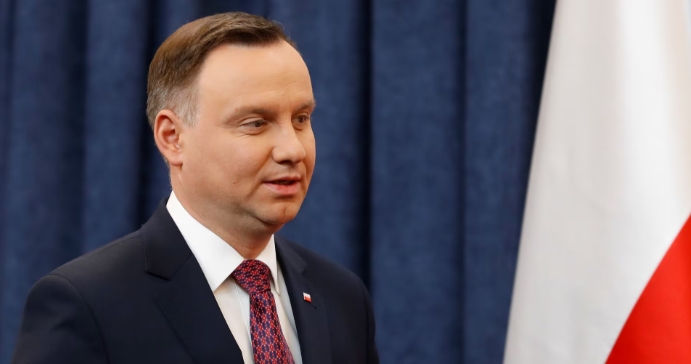
Karol Nawrocki has rejected a plan that would allow Poland to access nearly €44 billion in European Union defence funding, triggering a deep political clash with the country’s pro-EU government and raising questions about Europe’s broader security strategy.
The decision, which takes the form of a presidential veto, blocks legislation needed for Poland to tap into the EU’s Security Action for Europe (SAFE) programme a €150 billion initiative aimed at strengthening the continent’s military capabilities.
Veto blocks access to major EU defence funds
The disputed legislation would have enabled Poland to receive approximately €43.7–€44 billion in low-interest loans, making it the largest beneficiary of the SAFE programme.
President Nawrocki refused to sign the bill, arguing that relying on EU financing would increase Poland’s dependence on Brussels and undermine national sovereignty.
In a strongly worded stance, he warned that the programme could tie Poland to long-term foreign debt and expose its defence policy to external influence, including conditions imposed by EU institutions.
Government backlash and political divide
The veto has intensified tensions with Prime Minister Donald Tusk, whose government strongly supports participation in the EU scheme.
Tusk’s administration argues that the funding is critical for accelerating military modernisation, particularly in light of ongoing security concerns following Russia’s invasion of Ukraine.
Government officials say the loans would finance a wide range of defence projects, including border security, weapons systems and domestic arms production, without placing immediate strain on the national budget.
In response to the veto, Tusk has vowed to pursue alternative mechanisms a so-called “plan B” to ensure Poland can still access the funds, even if implementation becomes more complex and delayed.
Sovereignty concerns vs security needs
Nawrocki, aligned with the conservative opposition, has framed his decision as a defence of Polish sovereignty. He argues that EU-backed loans could limit Warsaw’s control over defence procurement and force reliance on European suppliers.
Critics, however, warn that rejecting the funding could weaken Poland’s military preparedness at a time of heightened regional tensions.
Analysts note that Poland has significantly increased defence spending in recent years, becoming one of NATO’s top spenders as it seeks to counter potential threats from Russia.
Alternative funding proposal
Instead of EU loans, Nawrocki has proposed using domestic financial resources, including profits from Poland’s central bank and gold reserves, to fund defence investments.
However, economists and government officials have expressed scepticism about the feasibility of this plan, warning it may lack the scale, stability, and speed required for large-scale military upgrades.
Wider European implications
The dispute reflects broader divisions within the European Union over defence integration and funding models.
The SAFE programme is a cornerstone of EU efforts to strengthen collective security, particularly as the United States signals a reduced role in European defence.
Poland’s hesitation driven by sovereignty concerns and political divisions highlights the challenges facing the bloc as it seeks to coordinate military spending among member states with differing priorities.
Outlook
While the veto represents a major setback, it does not entirely block Poland’s access to EU funds. The government is exploring alternative legal and financial pathways to secure the money, though this could slow down implementation.
As tensions between the presidency and government continue, the outcome of this dispute will be critical not only for Poland’s defence strategy but also for the future of EU-wide security cooperation.
________________________________________________________________________________________________________________