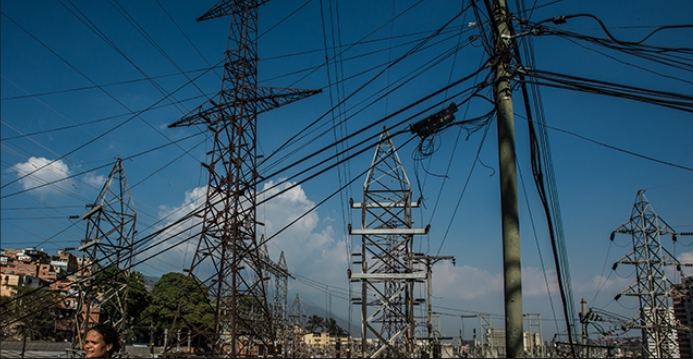
Venezuela’s efforts to restore its battered electricity system are facing a major obstacle as international power suppliers hesitate to take on urgent repair work without firm assurances they will be paid.
The hesitation comes at a critical moment for the South American nation, where years of underinvestment, poor maintenance and economic turmoil have left the power grid fragile and unreliable. Officials are seeking outside technical expertise and equipment to stabilize generation and transmission systems, but negotiations have been slowed by concerns over financial risk.
Venezuela Seeks Urgent Foreign Help
According to people familiar with recent discussions, Venezuelan officials held meetings in April with leading international energy equipment firms, including Siemens Energy and GE Vernova, to discuss emergency repairs and broader modernization work.
The talks focused on rehabilitating thermal power plants, improving transmission lines and restoring supporting infrastructure that has deteriorated sharply over the past decade. Officials view the power sector as central to the country’s wider economic recovery strategy.
Suppliers Demand Clear Payment Guarantees
Despite interest in the potential contracts, foreign suppliers have been reluctant to move forward because payment terms remain uncertain.
Several companies are said to have asked for advance funding or prepaid contract structures before committing personnel, parts and technical support. So far, Venezuelan authorities have not secured a financing framework capable of satisfying those demands.
Executives remain cautious not only because of current uncertainty, but also because several international contractors were left with unpaid receivables from previous Venezuelan infrastructure projects.
A Power System Near Breaking Point
Venezuela’s electricity network has been in decline for more than a decade.
Although the country officially has installed generation capacity of around 36,000 megawatts, industry estimates suggest only about 13,000 megawatts are currently available. Thermal plants, which are essential to reducing dependence on hydropower, are operating far below their intended capacity.
A lack of maintenance, shortages of spare parts and aging infrastructure have contributed to recurring failures across the network.
Blackouts Continue to Hit Homes and Industry
The consequences of the deteriorating grid continue to be felt across the country.
Frequent blackouts disrupt homes, hospitals, transport systems, telecommunications and water distribution. In industrial areas, unstable electricity supply has forced factories to cut output, raised production costs and undermined efforts to revive manufacturing.
For many Venezuelans, electricity shortages have become one of the most visible signs of the country’s prolonged economic crisis.
Sanctions and Old Debts Complicate Talks
Negotiations are also being shaped by legal and geopolitical constraints.
Foreign firms must consider sanctions-related compliance requirements, including possible approvals involving U.S. authorities. These regulatory hurdles add another layer of complexity to projects that already carry substantial commercial risk.
At the same time, the legacy of unpaid debts from earlier investment cycles continues to weigh heavily on corporate decision-making. Suppliers want evidence that new agreements will not repeat past financial disputes.
Billions Needed to Stabilize the Grid
Energy analysts say the scale of the required investment is enormous.
Experts estimate Venezuela may need at least $15 billion over the next three years simply to stabilize the grid, restore generation capacity and prevent further deterioration.
That spending would likely include urgent repairs to thermal plants, replacement of key equipment, acquisition of spare parts and upgrades to transmission systems that have suffered repeated breakdowns.
Economic Recovery Hinges on Reliable Electricity
The Venezuelan government sees reliable electricity as essential to broader economic recovery.
Stable power is considered crucial for the revival of oil refining, mining, manufacturing and other productive sectors. Without a more dependable energy supply, efforts to increase industrial activity and attract foreign investment will remain constrained.
Officials are therefore trying to position grid rehabilitation as part of a wider national reconstruction effort.
Investors Want Legal and Financial Certainty
Industry specialists say capital alone will not solve Venezuela’s electricity crisis.
Potential investors and contractors also want clearer tariff structures, stronger legal protections, transparent operating conditions and enforceable payment mechanisms before committing large sums of money.
Until those conditions are in place, many companies are expected to remain cautious despite the clear commercial opportunity.
Delays Could Deepen Venezuela’s Energy Crisis
The current talks highlight the difficult balance Venezuela faces in rebuilding critical infrastructure.
The country urgently needs foreign expertise, equipment and financing to restore its power network. But attracting that support will depend on convincing international suppliers that contracts are financially credible and operationally secure.
Without rapid progress on payment guarantees and investment conditions, Venezuela’s electricity crisis could deepen further prolonging blackouts and delaying the country’s broader economic recovery.
________________________________________________________________________________________________________________